
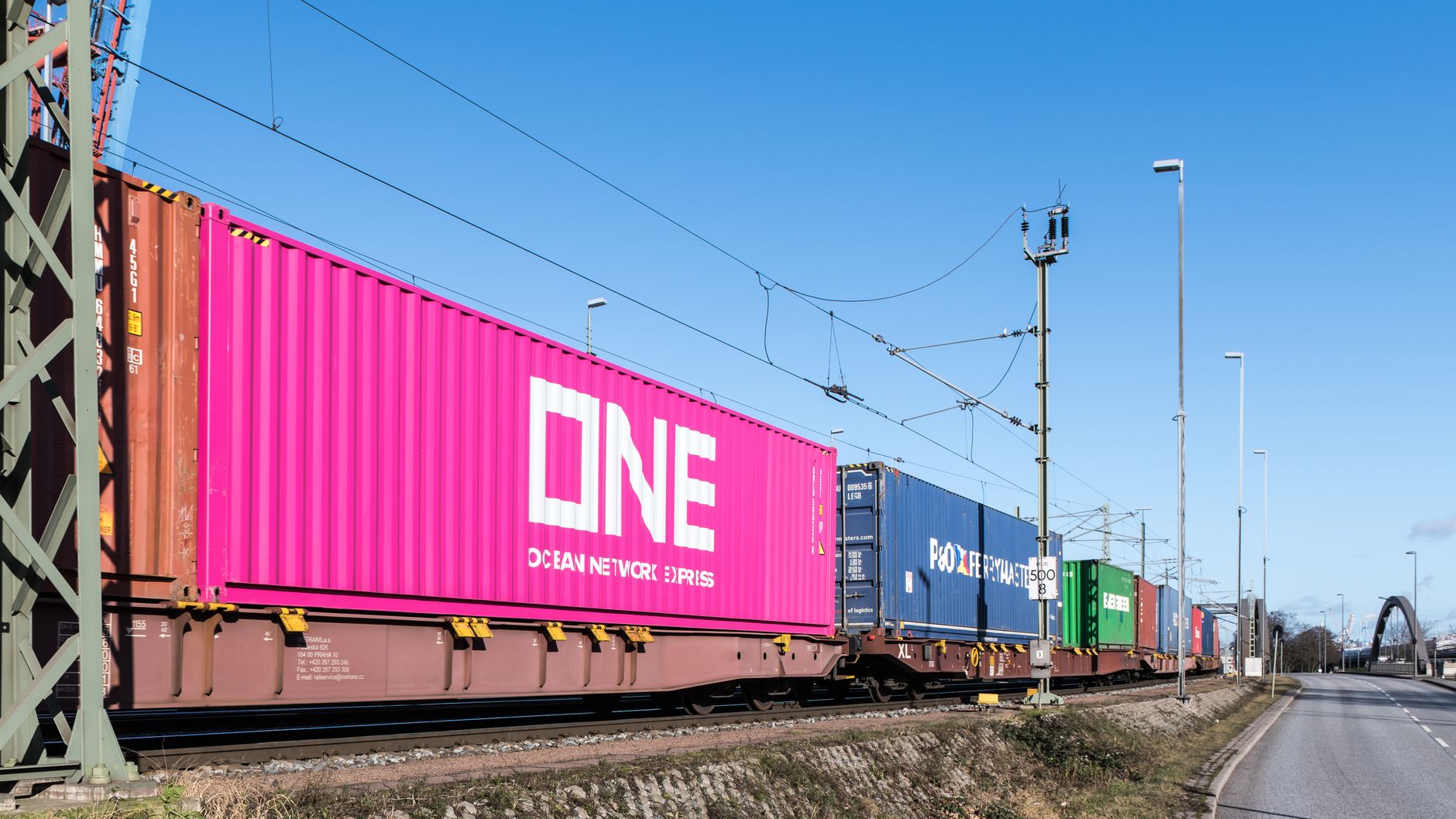
Photo by Wolfgang Weiser on Pexels
Verizon Crosses the Finish Line at Thames Freeport
After roughly 18 months of planning, coordination, and infrastructure buildout, Verizon has officially completed its private 5G deployment across Thames Freeport — one of the United Kingdom’s most ambitious freeport development projects. The five-site rollout stretches across a diverse operational landscape that includes port terminals, warehousing and logistics hubs, and advanced manufacturing facilities, making it one of the more complex private wireless deployments to reach completion in Europe to date.
Thames Freeport, which encompasses operations around Tilbury Docks, the Ford Dagenham estate, and DP World’s London Gateway, represents a flagship economic zone designed to attract investment and modernize industrial operations post-Brexit. Embedding a private 5G network into the core of that infrastructure signals that connectivity is now considered foundational — not supplementary — to the freeport’s long-term competitiveness.
What the Network Actually Looks Like
While Verizon has not disclosed every technical specification publicly, the deployment is understood to leverage dedicated spectrum in a non-public network (NPN) configuration, isolating traffic from the public cellular network to ensure the low latency, high reliability, and security that industrial operators demand. Each of the five sites features its own localized radio access and edge compute infrastructure, enabling workloads to be processed on-premises rather than routed to distant data centers.
Multi-Site Complexity and Integration Challenges
Deploying a unified private 5G network across five geographically and operationally distinct sites is no trivial feat. Port environments present unique RF propagation challenges — dense metallic structures, heavy machinery, and constantly shifting cargo containers can create signal dead zones and interference. Logistics warehouses demand seamless handoffs for autonomous guided vehicles (AGVs) and mobile scanning equipment, while manufacturing floors require deterministic latency for machine control and quality inspection systems.
Verizon’s engineering teams had to design site-specific radio configurations while maintaining a coherent, centrally managed network fabric — a challenge that speaks to the growing maturity of private 5G system integration as a discipline.
ECE Comes Back Into Focus
Perhaps as notable as the deployment itself is the renewed attention it draws to Edge Computing Environments, or ECE — a concept that had somewhat receded from the headlines amid broader discussions about cloud-native architecture and hyperscaler dominance. The Thames Freeport project is a concrete demonstration that true edge computing, with compute resources physically co-located at operational sites, is not just a theoretical advantage but an operational necessity in latency-sensitive industrial contexts.
For port operations, real-time cargo tracking, autonomous crane systems, and AI-powered anomaly detection all generate data that cannot afford the round-trip delay to a centralized cloud. Processing that data at the edge — within milliseconds of generation — changes what’s operationally possible. The same logic applies to predictive maintenance on the manufacturing floor and dynamic routing systems in the logistics layer.
Why ECE Stalled — And Why It’s Rebounding
ECE adoption faced headwinds in the early 2020s as enterprises struggled with total cost of ownership, management complexity, and a lack of standardized frameworks for deploying and orchestrating edge workloads alongside private 5G. Many pilots stalled at proof-of-concept stage. But the maturation of open standards, improved multi-access edge computing (MEC) platforms, and the arrival of more turnkey private 5G solutions from vendors like Verizon have lowered the barrier significantly. Thames Freeport may well be the kind of high-visibility reference deployment that re-accelerates enterprise ECE conversations globally.
Broader Market Implications
Verizon’s completion of the Thames Freeport project is a meaningful data point in the global private 5G market, which research firm MarketsandMarkets projects will grow from approximately $2.5 billion in 2023 to over $22 billion by 2028. Ports and logistics represent one of the highest-value verticals in that market, given the scale of operations, the density of connected assets, and the direct financial impact of operational efficiency gains.
For Verizon specifically, the Thames Freeport win extends its enterprise 5G credentials into the European market — territory where rivals like Ericsson, Nokia, and Deutsche Telekom’s T-Systems have traditionally held stronger footholds in private network deployments. It also demonstrates that US carriers are increasingly willing to pursue complex international enterprise contracts as the domestic private 5G market matures.
Competitive Landscape Heats Up
The project will not go unnoticed by competitors. BT Group, which has been aggressively marketing its own private 5G capabilities across UK industrial and logistics customers, will face renewed pressure to accelerate its own deployments. Meanwhile, neutral host providers and systems integrators are watching closely to see whether Verizon pursues further UK or broader European expansion in the industrial wireless space.
Looking Ahead
The completion of Thames Freeport’s private 5G network is more than a project milestone — it’s a proof point for an entire model of industrial digital transformation. As UK freeports continue to develop and global supply chain operators seek competitive advantages through automation and real-time intelligence, demand for purpose-built private wireless infrastructure will only intensify.
Industry analysts suggest that the next critical phase will be demonstrating measurable ROI at scale — something Thames Freeport operators will now be under pressure to quantify and publicize. If the numbers stack up convincingly, expect the pipeline of similar deployments across European ports and logistics corridors to accelerate sharply through 2025 and into 2026. For Verizon, and for the private 5G sector broadly, Thames Freeport may just be the beginning of a much larger industrial wireless story.
