
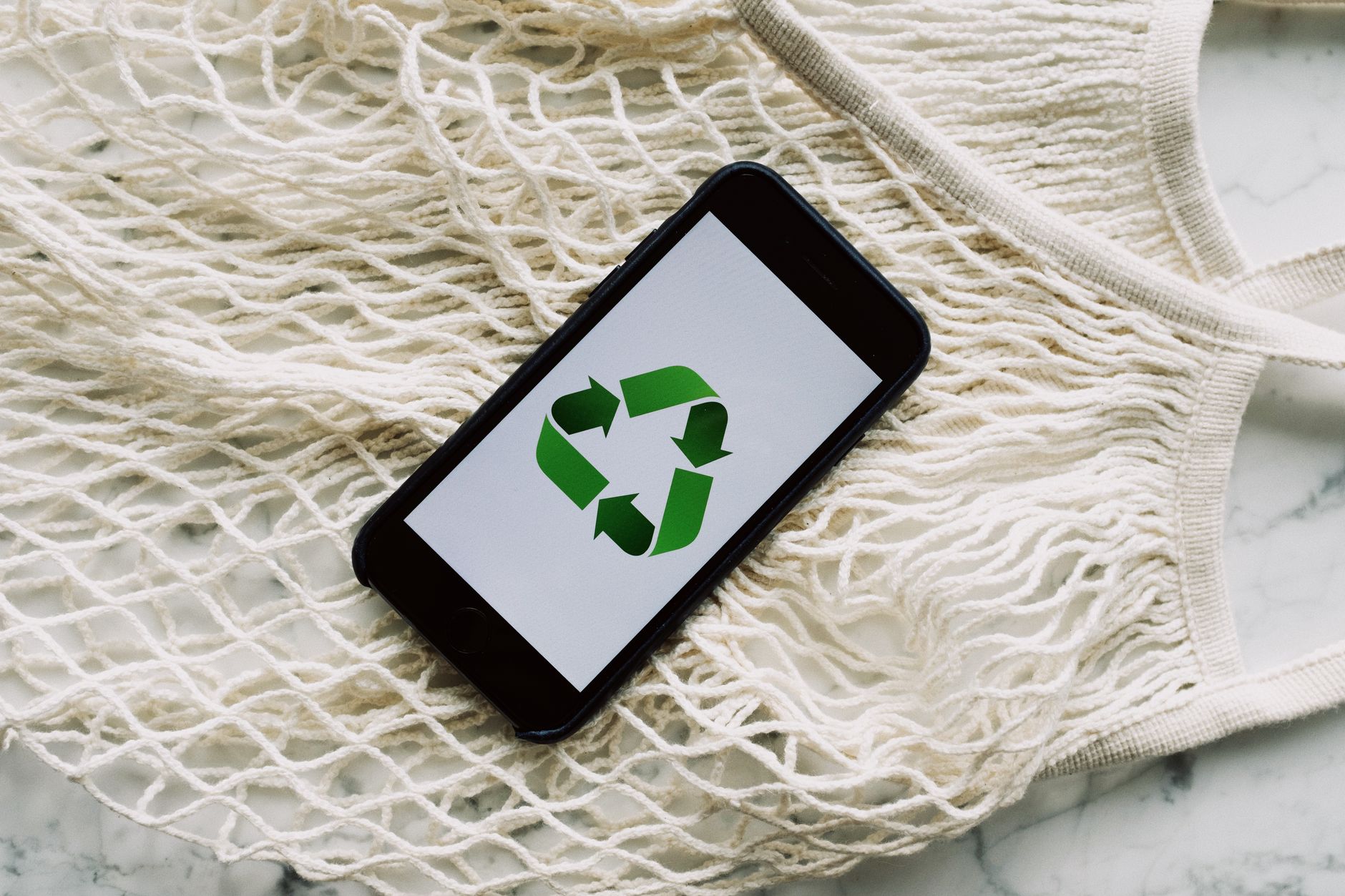
Photo by ready made on Pexels
The E-Waste Crisis Hidden Inside Your Smartphone
Every time a consumer upgrades to the latest flagship smartphone, an older device enters a troubling limbo. Globally, the world generated a record 62 million metric tonnes of electronic waste in 2022, according to the UN’s Global E-waste Monitor — and mobile devices represent one of the fastest-growing segments of that mountain. With more than 5.4 billion mobile subscribers worldwide and device replacement cycles averaging just two to three years, the telecom industry sits at the epicenter of one of the planet’s most pressing environmental challenges.
But the narrative is shifting. Industry stakeholders — from network operators and original equipment manufacturers (OEMs) to regulators and sustainability advocates — are increasingly framing e-waste not as an unavoidable byproduct of digital progress, but as an untapped reservoir of economic value and environmental opportunity. The circular economy model, long championed in theory, is finally gaining real traction across the mobile ecosystem.
What’s Actually Inside a Discarded Handset
To understand why circularity matters so profoundly for mobile, consider what’s inside a modern smartphone. A single device contains upwards of 60 different elements from the periodic table, including gold, silver, cobalt, lithium, rare earth metals like neodymium, and increasingly scarce materials such as indium and tantalum. The International Telecommunication Union (ITU) estimates that one tonne of mobile phones yields approximately 300 grams of gold — roughly 80 times the concentration found in gold ore.
Yet less than 20% of global e-waste is formally recycled, meaning the vast majority of these materials are either incinerated, landfilled, or processed through informal channels that pose serious public health risks. For an industry that prides itself on technological innovation, this represents both a moral failure and a staggering missed economic opportunity.
The Circular Economy Framework: Three Pillars for Telecom
1. Device Longevity and Refurbishment
The most environmentally impactful intervention is extending device lifespans. Refurbished smartphone markets are growing rapidly — the global secondary mobile device market is projected to reach $65 billion by 2027, according to IDC. Operators like Deutsche Telekom, Vodafone, and T-Mobile have launched certified pre-owned device programs that authenticate, repair, and resell used handsets, diverting millions of units from waste streams annually.
Software also plays a critical role. Extended OS support commitments from manufacturers like Apple and Samsung — now offering up to seven years of security updates on flagship devices — directly correlate with longer device retention. The EU’s Right to Repair legislation, which came into force in 2024, is further compelling manufacturers to make spare parts and repair manuals more accessible, fundamentally altering the economics of device maintenance.
2. Take-Back Programs and Reverse Logistics
Operator-led take-back programs are becoming a cornerstone of circular telecom strategies. When a customer trades in a device, sophisticated triage systems determine whether it enters the refurbishment stream, is harvested for components, or is sent for materials recovery. The key challenge has been building the reverse logistics infrastructure to make this economically viable at scale.
Some operators are partnering with specialized firms such as Assurant, Ingram Micro Lifecycle, and Recommerce Solutions to manage these complex supply chains. Meanwhile, GSMA’s Mobile for Development and sustainability initiatives are working to extend formal take-back infrastructure into emerging markets, where informal e-waste processing currently dominates — often with toxic consequences for local communities.
3. Materials Recovery and Urban Mining
For devices that cannot be refurbished or repaired, advanced materials recovery — often called urban mining — is the final frontier. Next-generation hydrometallurgical and pyrometallurgical processes are becoming more efficient at extracting high-purity metals from complex electronic assemblies. Companies like Umicore and Boliden are investing heavily in these capabilities, while Apple has famously deployed its Daisy robot, capable of disassembling 23 different iPhone models at a rate of 1.2 million units per year to recover materials including tungsten, steel, and rare earth magnets.
Network Infrastructure: The Overlooked Side of Telecom E-Waste
Device recycling captures headlines, but the decommissioning of network infrastructure presents an equally significant circularity challenge. The global 5G rollout is accelerating the retirement of 3G and 4G base station equipment at an unprecedented pace, generating thousands of tonnes of radio access network hardware annually. Major vendors including Ericsson, Nokia, and Huawei have established equipment buyback and refurbishment programs, with refurbished network gear finding second-life deployment in developing markets — a model that simultaneously addresses the digital divide and reduces industrial waste.
Regulatory Tailwinds and Industry Commitments
Regulatory momentum is building on multiple fronts. The EU’s Ecodesign for Sustainable Products Regulation (ESPR) is establishing mandatory repairability and recyclability standards for electronics. In parallel, the EU Battery Regulation is imposing strict requirements on cobalt and lithium content traceability — directly impacting how mobile OEMs source and recover battery materials.
Industry coalitions are stepping up as well. The GSMA’s Sustainability Commitments framework encourages operators to report on circular economy metrics, while the Alliance for Responsible Mining and similar bodies are linking responsible materials sourcing to end-of-life recovery in coherent lifecycle strategies.
Industry Outlook: Circularity as Competitive Advantage
The mobile industry’s relationship with e-waste is undergoing a fundamental transformation. What was once dismissed as a compliance cost is emerging as a genuine competitive differentiator — one that attracts environmentally conscious consumers, satisfies ESG investors, and builds resilience against critical mineral supply chain disruptions.
The operators and manufacturers that move earliest and most decisively to build circular capabilities — robust take-back programs, refurbishment ecosystems, and transparent materials recovery chains — will be best positioned as regulatory requirements tighten and resource scarcity intensifies. In an industry defined by perpetual technological disruption, the circular economy may prove to be the most consequential innovation of the decade.
