
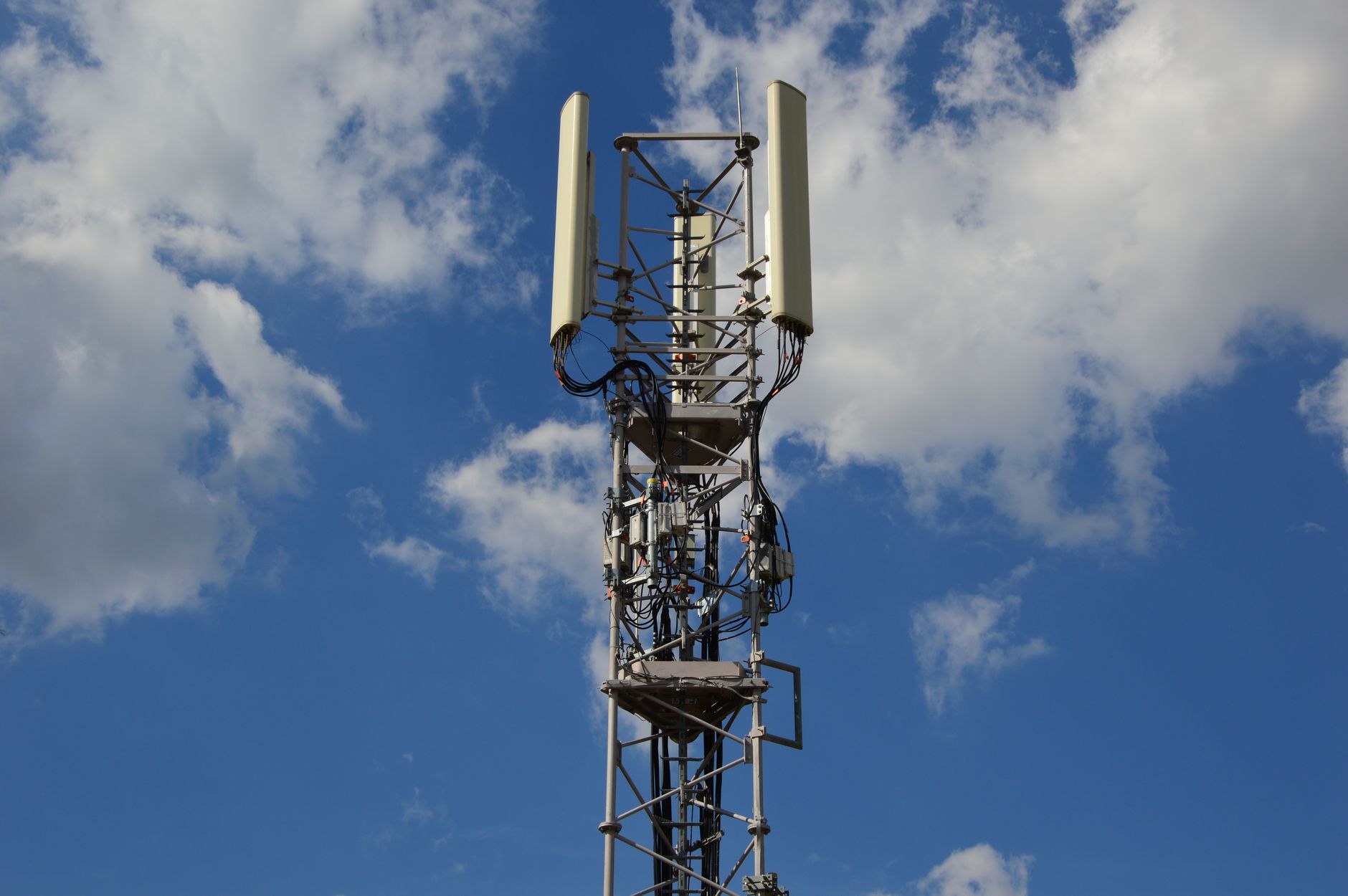
Photo by Ulrick Trappschuh on Pexels
VodafoneThree Steps Into the AI-RAN Arena with Nokia and Nvidia Partnership
The race to commercialize artificial intelligence within radio access networks is accelerating, and VodafoneThree — the newly merged entity born from Vodafone UK and Three UK’s landmark consolidation — is wasting little time staking its position. The carrier has formally joined Nokia and Nvidia’s growing AI-RAN testing coalition, signaling that GPU-powered radio infrastructure is moving from theoretical promise to serious operator evaluation.
VodafoneThree’s participation begins in a controlled lab environment, where engineers will stress-test the Nokia and Nvidia AI-RAN platform against real network conditions before committing to live field trials. The structured approach reflects a broader industry caution: enthusiasm for AI-RAN is high, but carriers are acutely aware that the gap between vendor demonstrations and production-grade performance can be wide.
What Is AI-RAN and Why Does It Matter?
AI-RAN represents a fundamental rethinking of how radio access networks are architected and operated. Rather than relying on traditional application-specific integrated circuits (ASICs) or fixed-function digital signal processors, AI-RAN platforms leverage graphics processing units — specifically Nvidia’s powerful GPU accelerators — to handle baseband processing workloads alongside AI inferencing tasks simultaneously on shared hardware.
Nokia’s AirScale platform, combined with Nvidia’s Aerial SDK and Grace Hopper or H100 GPU infrastructure, forms the technical backbone of the solution being evaluated. The promise is compelling: a single GPU-accelerated server rack can run both the computationally intensive physical layer functions of a 5G base station and AI-driven optimization models in real time, without the latency penalties that would come from offloading those decisions to a centralized cloud.
Key Performance Claims Under the Microscope
Among the metrics VodafoneThree engineers will scrutinize during lab trials are spectral efficiency improvements, latency characteristics under varying load conditions, and the platform’s ability to dynamically allocate compute resources between traditional RAN functions and AI workloads. Nokia and Nvidia have previously demonstrated throughput gains and energy efficiency improvements in controlled settings, but independent carrier validation is what transforms a vendor claim into a deployable technology.
Critically, the testing scope extends beyond raw radio performance. VodafoneThree will assess whether GPU-powered infrastructure can credibly support network slicing — the ability to carve a single physical network into multiple virtualized logical networks with distinct performance characteristics — and whether the platform can host third-party applications without compromising core network operations. This latter capability is particularly significant for operators looking to monetize their infrastructure by offering edge computing services to enterprise customers.
A Growing Coalition of Serious Players
VodafoneThree joins an increasingly prestigious testing roster. Nvidia’s AI-RAN coalition, launched publicly at Mobile World Congress 2024, has attracted commitments from operators including SoftBank, T-Mobile, and Bharti Airtel, alongside network equipment vendors, cloud providers, and silicon manufacturers. The breadth of participation suggests the industry views GPU-accelerated RAN not as a niche experiment but as a potential mainstream architecture path for 5G Advanced and eventual 6G deployments.
Nokia’s position in this ecosystem is strategically vital. As one of the world’s two dominant RAN equipment vendors alongside Ericsson, Nokia’s willingness to deeply integrate Nvidia silicon and software into its own product line represents a significant departure from the proprietary ASIC-centric model that has defined RAN hardware for decades. It also creates competitive pressure on Ericsson, which has been pursuing its own AI-RAN roadmap through its partnership with Qualcomm’s enterprise processor division.
The Network Slicing and Third-Party Application Dimension
The network slicing evaluation component of VodafoneThree’s trials deserves particular attention. As the merged carrier works to rationalize two separate network footprints and position itself competitively in the UK enterprise market, flexible network slicing capabilities are strategically essential. GPU-based platforms theoretically offer more dynamic resource allocation than traditional RAN hardware, but whether that flexibility holds under real-world traffic conditions remains to be demonstrated at scale.
The third-party application testing angle also points toward a broader ambition: transforming the RAN from a connectivity pipe into a programmable compute platform. If verified, this would allow VodafoneThree to offer low-latency edge services — think industrial automation, augmented reality applications, or real-time video analytics — directly from the radio edge, potentially unlocking new revenue streams that pure connectivity cannot provide.
Challenges on the Road to Commercialization
Despite the momentum, significant hurdles remain. GPU servers consume considerably more power than purpose-built ASIC hardware, raising questions about total cost of ownership and sustainability commitments. Thermal management in outdoor RAN deployments presents engineering challenges distinct from data center environments. And the software ecosystem — including real-time operating system optimizations, driver stability, and integration with existing OSS/BSS platforms — needs to mature substantially before large-scale rollouts become practical.
VodafoneThree’s methodical lab-first approach suggests the operator understands these complexities. By generating its own performance data before committing to field trials, the carrier retains negotiating leverage with vendors and builds internal expertise that will be essential for managing a commercially deployed AI-RAN infrastructure.
Industry Outlook: The Verdict Is Still Being Written
The coming 12 to 18 months of AI-RAN field trials across multiple carriers will likely determine whether GPU-accelerated radio infrastructure becomes a mainstream 5G evolution path or remains a premium niche for high-density, high-value deployments. VodafoneThree’s participation adds meaningful credibility to the technology’s commercial trajectory — and given the scale and spectrum assets the newly merged UK operator commands, positive trial results could accelerate adoption across European markets considerably.
For Nokia and Nvidia, every new carrier joining the testing ecosystem strengthens their joint value proposition and generates real-world validation data that no laboratory benchmark can fully replicate. The AI-RAN story is still being written, but with operators of VodafoneThree’s stature now actively kicking the tires, the narrative is clearly moving from hype to hard evaluation.
