
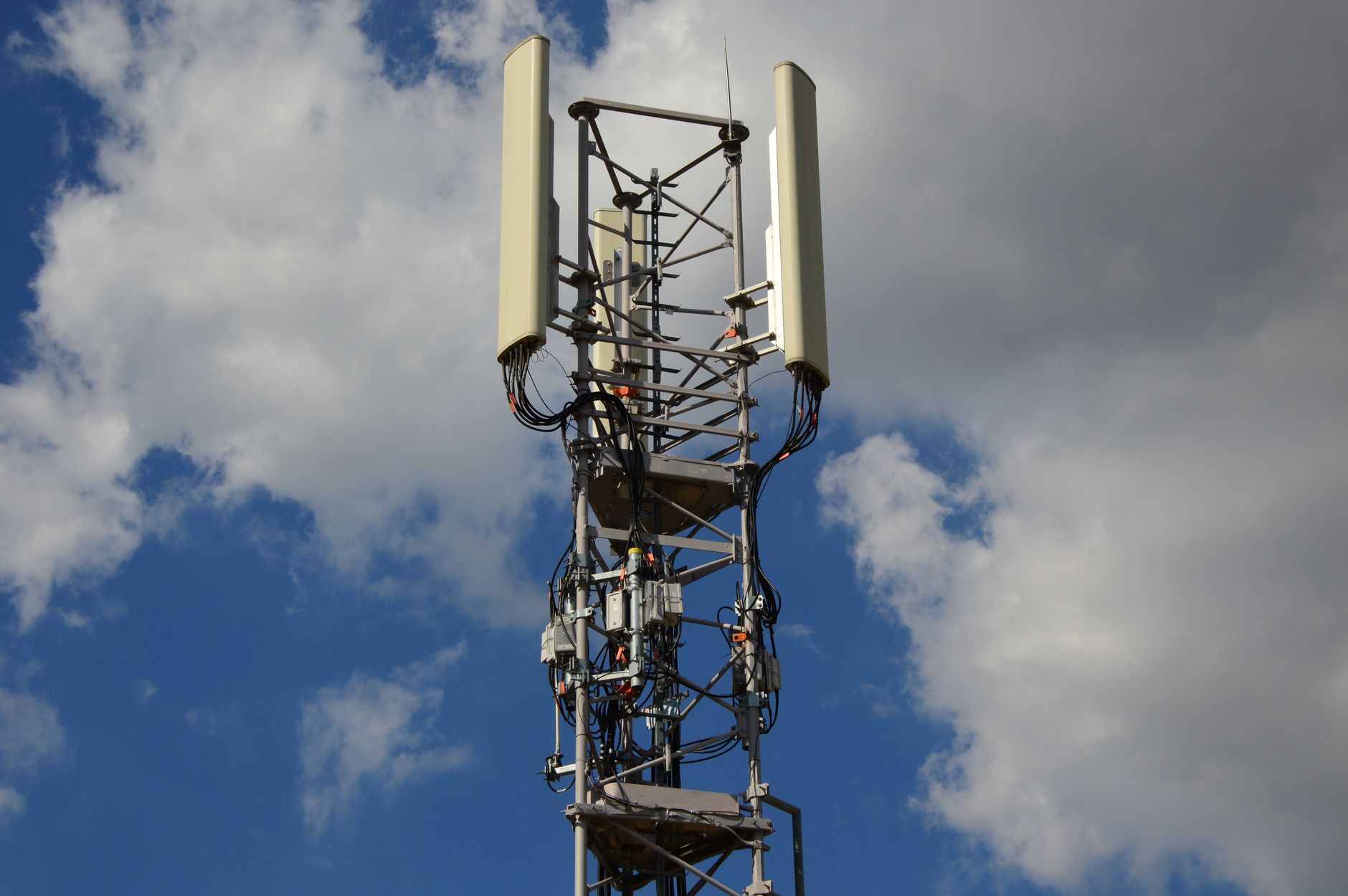
Photo by Ulrick Trappschuh on Pexels
For years, the narrative around private 5G was one of imminent disruption — a technology poised to sweep Wi-Fi out of warehouses, factories, and enterprise campuses almost overnight. The reality, as the industry is now discovering, is considerably more nuanced. Private 5G is unquestionably scaling, moving from proof-of-concept trials into serious requests for proposals (RFPs) and large-scale industrial deployments. But Wi-Fi isn’t flinching. In fact, the two technologies are carving out distinct and often complementary roles in the enterprise wireless ecosystem.
From Pilots to Production: Private 5G Grows Up
The shift from experimentation to execution is perhaps the most significant development in private 5G’s maturation curve. Enterprises across manufacturing, logistics, healthcare, and energy sectors are no longer asking “can this work?” — they’re asking “how do we deploy this at scale?” Industrial campuses with sprawling square footage, complex RF environments, and demanding latency requirements are emerging as the clearest early wins for private 5G advocates.
The technical value proposition remains compelling. Private 5G operating on CBRS (Citizens Broadband Radio Service) spectrum in the 3.5 GHz band offers deterministic latency, superior coverage in challenging environments, and the ability to support thousands of connected devices with consistent QoS (Quality of Service). For mission-critical applications — autonomous guided vehicles (AGVs), robotic assembly lines, real-time video inspection, and time-sensitive industrial control systems — these attributes are genuinely difficult to replicate with Wi-Fi alone.
The Friction Points Holding Private 5G Back
Despite the momentum, three persistent friction points continue to slow enterprise adoption at scale: device availability, CBRS ecosystem limitations, and the often-overlooked complexity of carrier approvals.
Device Fragmentation Remains a Real Problem
Unlike Wi-Fi, where virtually every laptop, smartphone, tablet, and IoT sensor ships with built-in connectivity, the private 5G device ecosystem is still maturing. Enterprises looking to retrofit existing equipment or source new endpoints with native CBRS support frequently encounter limited options, elevated costs, and integration headaches. Industrial-grade 5G modules and ruggedized devices are improving, but the breadth and affordability of Wi-Fi-compatible hardware remains a significant competitive advantage for the incumbent technology.
CBRS: Powerful but Not Unlimited
The CBRS band has been a game-changer for private 5G in the United States, enabling enterprises to deploy networks without acquiring licensed spectrum. However, CBRS comes with its own set of constraints. Spectrum availability can vary by geography due to incumbent users — particularly U.S. Navy radar systems — managed through the Spectrum Access System (SAS). Power limitations in the General Authorized Access (GAA) tier can also restrict coverage range and building penetration in complex environments, pushing some deployments toward Priority Access Licenses (PALs), which reintroduce cost and complexity.
Carrier Integration and Approval Complexity
For enterprises pursuing private 5G models that involve carrier-managed or hybrid deployments, navigating carrier approval processes adds another layer of friction. Integrating private network infrastructure with public 5G cores, managing roaming agreements, and ensuring compliance with operator policies can extend deployment timelines significantly. This is particularly challenging for enterprises that want seamless handoffs between private campus networks and wide-area carrier coverage — a capability that remains more aspirational than operational in many real-world deployments.
Why Wi-Fi 6 and 6E Aren’t Conceding Ground
Meanwhile, Wi-Fi has not been standing still. The widespread rollout of Wi-Fi 6 (802.11ax) and the emergence of Wi-Fi 6E — which unlocks the 6 GHz band for unlicensed use — have substantially improved throughput, latency, and device density management. For general enterprise environments, collaborative workspaces, and even many light industrial applications, Wi-Fi 6E delivers performance that was unimaginable just a few years ago.
The economics also favor Wi-Fi in many scenarios. Infrastructure costs are lower, the installer base is vastly larger, and the management tooling is mature. For IT departments already running sophisticated Wi-Fi environments, the incremental value of layering in private 5G requires a clear, quantifiable use case to justify the investment and operational complexity.
Coexistence: The More Honest Story
The most sophisticated enterprise network architects are increasingly designing for coexistence rather than replacement. A tiered wireless strategy — where Wi-Fi handles general connectivity and latency-tolerant workloads while private 5G anchors mission-critical, high-mobility, or outdoor coverage requirements — is emerging as the pragmatic deployment model. Some vendors are even developing unified management platforms that treat both network types as complementary layers within a single wireless fabric.
This approach mirrors how enterprises have historically handled wired versus wireless transitions: not as a winner-take-all displacement event, but as a gradual, use-case-driven evolution.
Industry Outlook
Analysts project the global private 5G market will exceed $25 billion by the late 2020s, with manufacturing and logistics leading adoption. But sustained growth will depend on how quickly the industry can resolve the device ecosystem gaps, simplify CBRS deployment processes, and reduce the operational burden of carrier integration.
The technologies that ultimately win in the enterprise wireless space won’t necessarily be the ones with the best spec sheets — they’ll be the ones that are easiest to deploy, manage, and justify on a balance sheet. Right now, private 5G and Wi-Fi both have compelling answers to that question, depending on where you look on a factory floor. And that, perhaps more than anything, is why this competition is far from over.
