
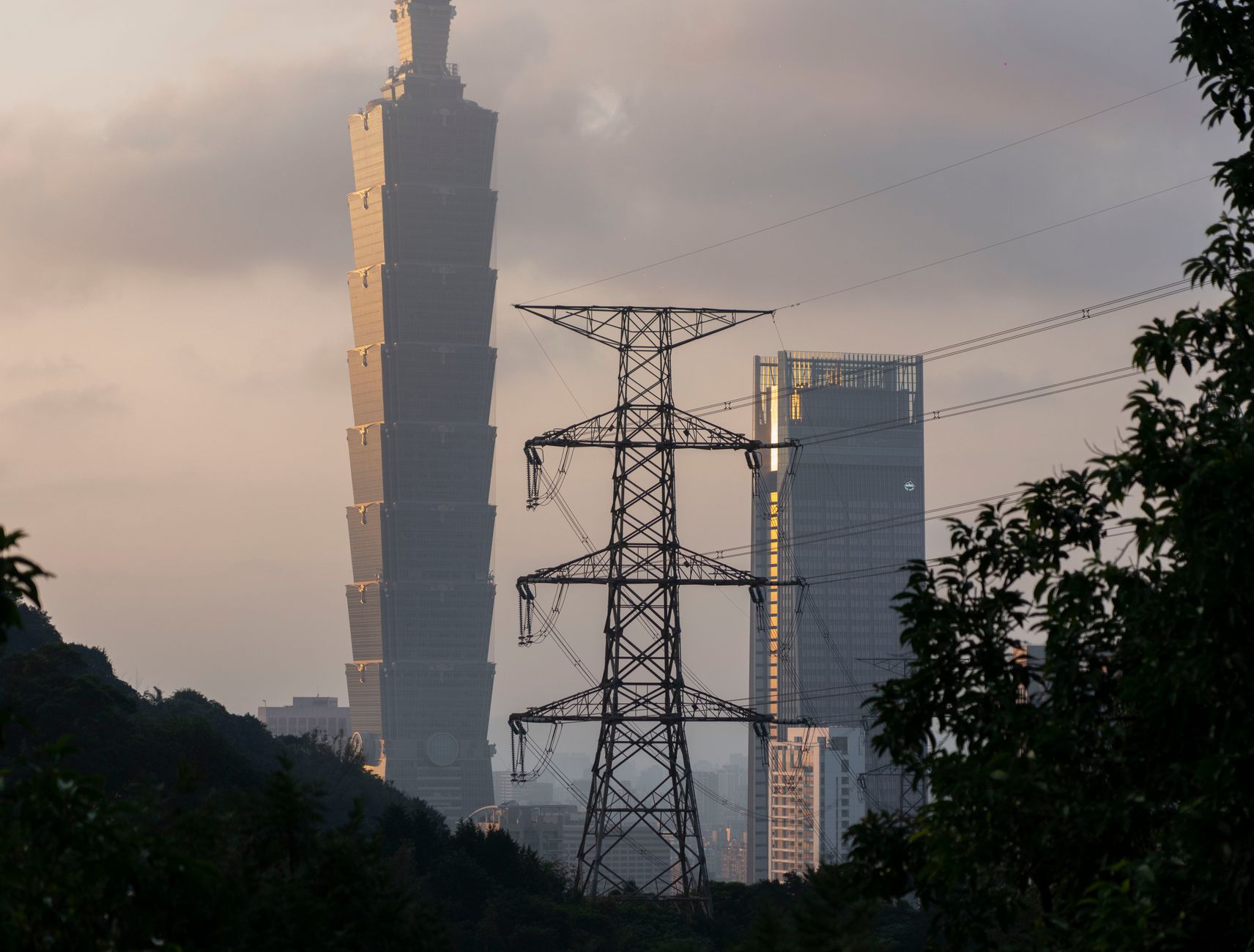
Photo by Jimmy Liao on Pexels
Chunghwa Telecom Brings Major AI Data Center Online in Taoyuan
Taiwan’s largest telecommunications operator, Chunghwa Telecom, has officially commenced operations at its newly constructed artificial intelligence data center located in Lunping, Taoyuan. The facility, which began commercial operations during the second quarter of this year, represents one of the most significant infrastructure investments the company has made in recent years — and signals a broader strategic pivot toward AI-ready network services across the Asia-Pacific region.
The new data center is expected to add up to 36 megawatts (MW) of capacity to Chunghwa’s total internet data center (IDC) footprint, a substantial boost that reflects surging demand from enterprises, cloud providers, and government agencies racing to deploy large-scale AI applications and workloads.
Why This Facility Matters: AI Workloads Demand Purpose-Built Infrastructure
Traditional data centers were designed primarily to host general-purpose computing and storage workloads. But the explosion of generative AI, machine learning model training, and inference-at-scale has created an entirely different set of infrastructure requirements — including high-density power delivery, advanced liquid cooling systems, ultra-low latency networking fabrics, and support for GPU-accelerated computing clusters.
The Lunping facility appears purpose-built to address exactly these demands. By targeting AI-specific infrastructure from the ground up, Chunghwa is positioning itself not just as a connectivity provider, but as a full-stack digital infrastructure partner capable of hosting the compute-intensive environments that modern AI deployments require.
The 36MW capacity addition is particularly noteworthy. In AI data center terms, that level of power capacity can support thousands of high-performance GPU nodes — the kind of hardware used to train and run frontier AI models. For context, a single rack of NVIDIA H100 or H200 GPUs can consume anywhere from 40kW to 80kW of power, meaning this facility could potentially host hundreds of such racks across its operational lifecycle.
Taiwan’s Strategic Role in the Global AI Supply Chain
The timing of Chunghwa’s expansion is no coincidence. Taiwan sits at the epicenter of the global semiconductor and AI hardware ecosystem, home to TSMC, MediaTek, and a dense network of chip design and manufacturing firms that supply the world’s leading AI companies. As hyperscalers and enterprise customers increasingly seek to co-locate AI infrastructure closer to their hardware supply chains and R&D centers, Taiwan has become a natural anchor point for regional AI data center investment.
Chunghwa’s move follows a wave of similar announcements across the Asia-Pacific region. Major cloud providers including Microsoft, Google, and Amazon Web Services have all expanded or announced new data center investments in the region, while regional telcos from Singapore’s Singtel to South Korea’s KT Corp have been racing to upgrade their own IDC capabilities to capture enterprise AI demand.
Domestic Enterprise Demand Fueling Investment Case
Beyond the regional dynamics, domestic demand within Taiwan is also a significant driver. The Taiwanese government has been actively promoting AI adoption across manufacturing, healthcare, and financial services as part of its broader digital transformation agenda. Large Taiwanese enterprises — from contract electronics manufacturers to financial institutions — are rapidly deploying AI-driven analytics, automation, and customer experience platforms that require reliable, high-performance local compute infrastructure.
For Chunghwa, which already operates an extensive IDC network across Taiwan, the Lunping facility strengthens its ability to offer integrated solutions that combine connectivity, cloud, and AI compute under a single managed service umbrella — a compelling proposition for enterprise customers seeking to simplify their vendor relationships.
Expanding IDC Capacity: A Telco-Wide Trend
Chunghwa’s investment reflects a broader transformation underway across the global telecommunications industry. Faced with slowing growth in traditional voice and data services, telecom operators worldwide are aggressively expanding into adjacent digital infrastructure markets — including data centers, edge computing, and managed AI services — to diversify revenue streams and defend against disintermediation by hyperscale cloud providers.
According to industry analysts, telecom-operated data centers are increasingly competitive with hyperscaler offerings for latency-sensitive and data-sovereignty-conscious workloads, particularly in regulated industries like finance, healthcare, and government. Telcos’ built-in advantages — including extensive fiber backhaul, established enterprise relationships, and geographic reach — make them natural candidates to host AI infrastructure at the network edge.
Power and Sustainability: The Hidden Challenge
Adding 36MW of data center capacity also brings significant power and sustainability considerations. AI workloads are notoriously energy-intensive, and as data centers scale up to meet demand, operators face mounting pressure from regulators, investors, and customers to demonstrate credible green energy strategies. How Chunghwa plans to source and manage power for the Lunping facility — whether through renewable energy procurement, on-site generation, or grid optimization — will be an important dimension of the project’s long-term viability and public positioning.
Outlook: Chunghwa Sets the Pace for Taiwan’s AI Infrastructure Race
The commissioning of the Lunping AI data center marks a defining moment for Chunghwa Telecom’s evolution from a traditional network operator to a diversified digital infrastructure provider. As enterprise AI adoption accelerates and competition for premium IDC capacity intensifies, early movers with purpose-built, high-capacity AI facilities stand to capture outsized market share.
For the broader telecom industry, Chunghwa’s playbook — investing heavily in AI-ready data center infrastructure adjacent to its core network assets — offers a compelling blueprint. In a landscape where AI is rapidly becoming the defining technology of the decade, operators that build the infrastructure layer now are likely to shape the competitive dynamics of the industry for years to come.
