
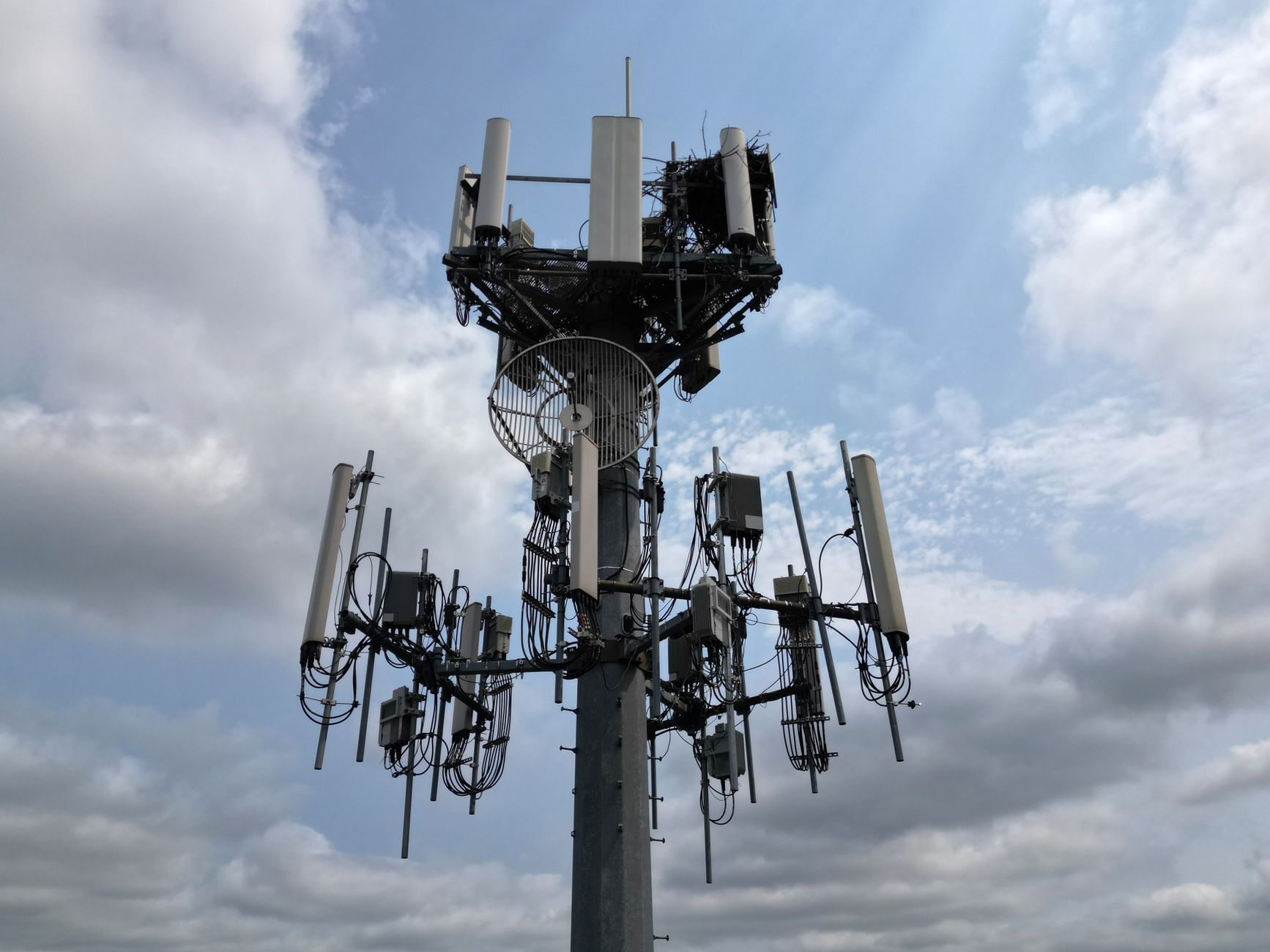
Photo by Giant Asparagus on Pexels
Ericsson Secures Exclusive Partnership Role in South Korea’s AI-RAN Frontier
In a development that underscores the accelerating convergence of artificial intelligence and radio access network technology, Ericsson has been designated as the sole global technology partner in a high-profile AI-RAN pilot program led by SK Telecom. The initiative, anchored within South Korea’s broader national AI Highway strategy, will see cutting-edge AI-native RAN solutions deployed at KG Mobility — marking one of the most concrete real-world validations of AI-RAN technology in an industrial enterprise setting to date.
The announcement positions Ericsson as a cornerstone collaborator in South Korea’s ambitions to lead global AI infrastructure development, while simultaneously reinforcing the Swedish vendor’s standing as a frontrunner in the hotly contested AI-RAN technology race.
What Is AI-RAN — and Why Does It Matter?
AI-RAN, or Artificial Intelligence Radio Access Network, represents the next evolutionary leap beyond traditional and even cloud-native RAN architectures. Rather than simply applying machine learning algorithms as an optimization layer on top of existing RAN software, true AI-RAN embeds AI natively into the fabric of radio network operations — from spectrum management and interference coordination to beamforming decisions and predictive maintenance.
The practical benefits are substantial. AI-native radio networks can dynamically adapt to rapidly changing network conditions in near real-time, dramatically improving spectrum efficiency, reducing energy consumption, and enhancing the reliability of ultra-low-latency services that advanced industrial applications demand. For a site like KG Mobility — a South Korean automotive manufacturer with complex, high-density connectivity requirements across production floors — these capabilities are not merely attractive but increasingly essential.
Industry analysts have long argued that AI-RAN will be a defining differentiator in the 5G Advanced and eventual 6G era, and early mover advantages in deployment expertise could prove decisive for both vendors and operators alike.
The AI Highway: South Korea’s National Vision for AI-Driven Connectivity
The SK Telecom-Ericsson collaboration sits within the framework of South Korea’s AI Highway initiative — a government-backed strategy designed to accelerate the deployment of AI-integrated network infrastructure across the country. South Korea has consistently ranked among the world’s most aggressive 5G adopters, with nationwide 5G coverage milestones achieved faster than virtually any other market, and the AI Highway plan represents the nation’s intent to replicate that leadership in the AI-native network era.
Under the AI Highway framework, select industrial and enterprise sites serve as testbeds for next-generation connectivity technologies, generating real-world performance data that can inform broader nationwide rollout strategies. KG Mobility’s inclusion as a pilot site reflects the automotive and manufacturing sectors’ growing role as proving grounds for advanced private network deployments — a trend visible across Germany, Japan, and the United States as well.
Private Networks as AI-RAN Laboratories
The choice of an enterprise private network environment for this AI-RAN pilot is strategically significant. Private 5G networks, by their nature, offer controlled environments with defined use cases and measurable performance benchmarks — making them ideal for validating AI-RAN capabilities before broader operator-scale deployment. KG Mobility’s production facilities will generate the kind of dense, latency-sensitive traffic — think autonomous guided vehicles, real-time quality inspection systems, and connected robotics — that stress-tests AI-RAN’s adaptive intelligence in ways that test labs simply cannot replicate.
For Ericsson, the exclusive partnership designation is a meaningful commercial and reputational win. The company has invested heavily in AI-RAN research and development, including through collaborations with NVIDIA on AI computing infrastructure for RAN workloads. Securing sole-partner status in a nationally prominent pilot effectively allows Ericsson to shape the AI-RAN deployment playbook in one of the world’s most sophisticated telecom markets.
Competitive Implications Across the Vendor Landscape
The Ericsson-SK Telecom deal will not go unnoticed by competitors. Nokia, Samsung Networks, and Huawei are all advancing their own AI-native RAN roadmaps, and each will be watching the KG Mobility deployment closely. Samsung, in particular, has a strong domestic position in South Korea and has been an active contributor to AI-RAN standardization efforts within the O-RAN Alliance and 3GPP.
The exclusivity of Ericsson’s role — rather than a multi-vendor open RAN arrangement — also raises interesting questions about the direction South Korea’s AI-RAN ecosystem will take. While Open RAN principles emphasize disaggregation and interoperability, complex AI-native network pilots often benefit from the tighter integration and end-to-end optimization that a single vendor can provide, at least in early stages.
Industry Outlook: AI-RAN Moves from Concept to Reality
The SK Telecom-Ericsson AI-RAN pilot represents something genuinely new in the telecommunications landscape: a national operator, backed by government strategy and partnered with a Tier-1 global vendor, deploying AI-native RAN not in a lab but in a live industrial environment with real operational stakes.
As 5G Advanced specifications mature and 6G research intensifies, the industry consensus is increasingly clear — AI will not be a feature added to future networks, but the foundation upon which they are built. South Korea, with this initiative, is staking an early claim to define what that foundation looks like in practice.
For Ericsson, the partnership is both a technological showcase and a commercial template. If the KG Mobility deployment delivers on its performance promises, expect the AI-RAN conversation to shift decisively from “when” to “how fast” — and expect more operators globally to come knocking.
