
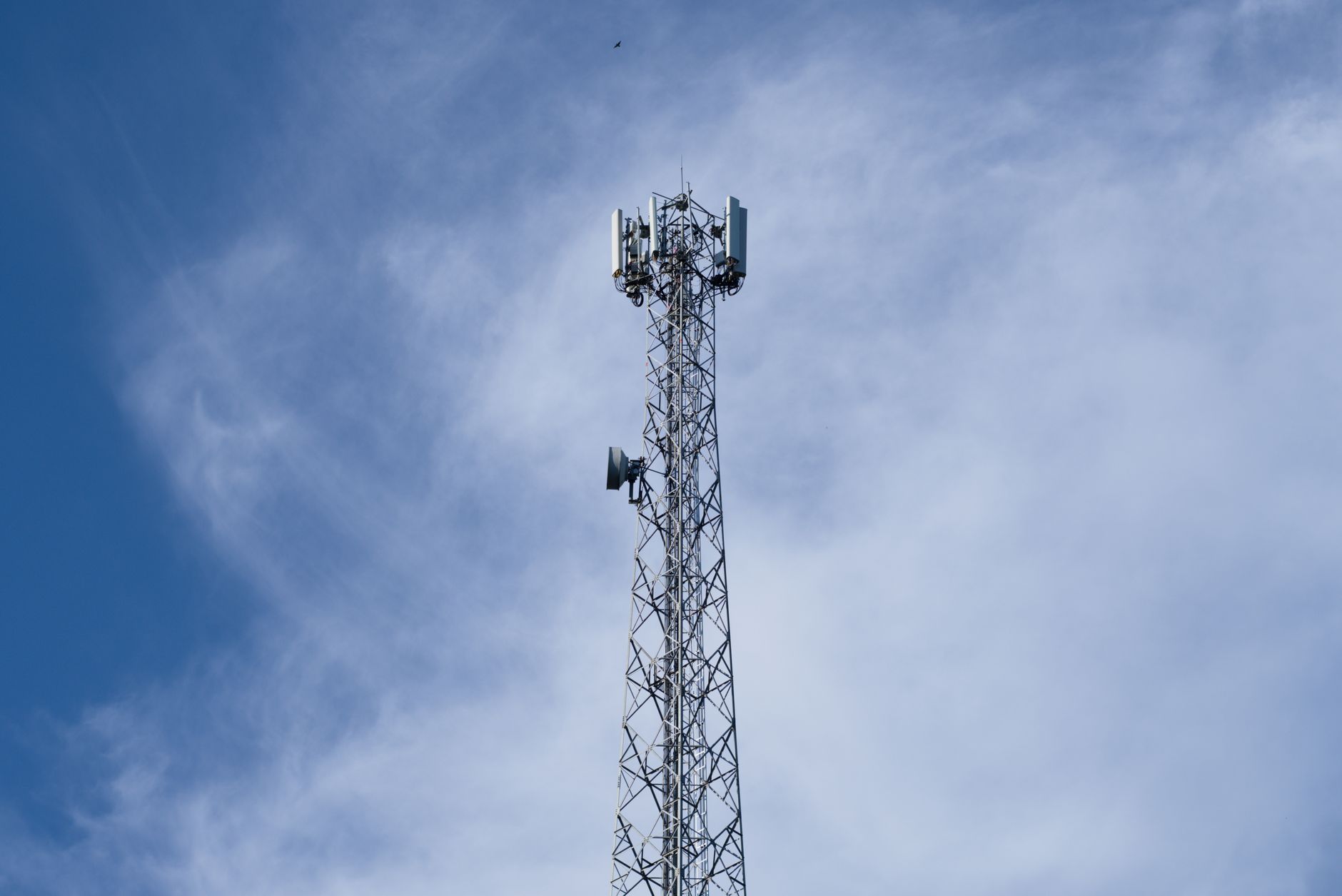
Photo by Qeis Ismail on Pexels
AT&T Waves Goodbye to Mexico — And a Decade of Ambition
It was never going to be easy. When AT&T made its bold push into the Mexican wireless market nearly a decade ago — acquiring Iusacell and Nextel México in a pair of deals totaling over $4 billion — the carrier envisioned a seamless cross-border network stretching from Anchorage to the Yucatán. That dream is now officially for sale, with AT&T confirming it has reached an agreement to divest its Mexican operations for approximately $2 billion, roughly half of what it originally spent to build the business.
The buyer has not been publicly disclosed at the time of writing, but the transaction marks one of the most symbolically significant strategic retreats in recent U.S. telecom history. For AT&T, the message is unambiguous: the future is domestic, and the distractions of an underperforming foreign subsidiary are no longer a luxury the company can afford.
Why Mexico Never Delivered
On paper, the Mexican market was compelling. With over 130 million people, rapid smartphone adoption, and a historically underpenetrated broadband landscape, Mexico looked like a greenfield opportunity for a carrier with AT&T’s scale and spectrum expertise. The reality was considerably messier.
AT&T Mexico consistently faced an uphill battle against América Móvil — the Slim family-controlled juggernaut that commands roughly 60% of the Mexican wireless market through its Telcel brand. Despite investing heavily in LTE network buildout and attempting to differentiate on cross-border data and roaming plans appealing to U.S.-Mexico travelers and businesses, AT&T never cracked double-digit market share in a meaningful way.
Network quality remained a persistent challenge. AT&T Mexico’s LTE coverage, while improved over time, lagged behind Telcel’s depth of infrastructure, particularly in rural and semi-urban areas. Spectrum holdings, while adequate for urban deployments, limited the carrier’s ability to compete aggressively on coverage — the single most important purchasing criterion for Mexican mobile consumers.
The Financial Math Didn’t Work
AT&T’s Mexican unit generated revenues in the range of $3 billion annually in recent years, but profitability remained elusive at the EBITDA margins the parent company demands. With AT&T carrying well over $100 billion in net debt following its now-reversed media diversification strategy, every underperforming asset is under scrutiny. Mexico, generating perhaps 3-4% of group revenues while consuming capital that could be redeployed in the hypercompetitive U.S. fiber and 5G race, became an obvious candidate for divestiture.
The Home Front Isn’t Exactly Quiet
If AT&T executives are expecting a quieter life by refocusing domestically, Elon Musk’s Starlink has other ideas. SpaceX’s satellite internet service has quietly grown into one of the most disruptive forces in U.S. broadband, with over 3 million active subscribers globally and an increasingly aggressive push into fixed wireless access (FWA) for homes and businesses.
While Starlink’s current latency figures — typically ranging from 25ms to 60ms on its Gen 2 constellation — still fall short of fiber-grade performance for latency-sensitive applications, the service has become genuinely competitive in rural and exurban markets where AT&T’s fiber footprint remains thin. SpaceX has also been exploring direct-to-device (D2D) satellite connectivity through its partnership with T-Mobile, a development that could eventually threaten traditional cellular coverage moats that carriers like AT&T have long taken for granted.
AT&T’s Domestic 5G and Fiber Bet
AT&T’s counterplay is a massive domestic infrastructure investment program. The company has committed to passing 30 million fiber locations by the end of 2025 under its AT&T Fiber rollout, and its FirstNet-anchored 5G network now covers over 280 million people with mid-band spectrum. The carrier has been deploying C-band spectrum — acquired at significant cost in the FCC’s Auction 107 — to deliver the sub-6 GHz 5G performance necessary to compete with T-Mobile’s well-established mid-band network and Verizon’s own C-band acceleration.
The $2 billion in Mexican sale proceeds, while modest relative to AT&T’s overall capital needs, could meaningfully accelerate fiber passings or fund additional spectrum investments — potentially in the upcoming CBRS or 3.45 GHz band proceedings. Management has consistently signaled that capital discipline and debt reduction remain the twin priorities as the company attempts to re-earn investor confidence following the WarnerMedia era.
Industry Outlook: Consolidation and the Satellite Wild Card
AT&T’s Mexico exit is part of a broader pattern of Western carriers rationalizing international footprints in favor of domestic 5G and fiber intensity. Vodafone has been executing a similar playbook across Europe, and the logic is sound: scale advantages in telecom are increasingly national rather than multinational, particularly as 5G spectrum licensing and network slicing create country-specific competitive dynamics.
The more intriguing strategic question is how incumbents like AT&T will respond as Starlink and potential low-earth orbit (LEO) competitors such as Amazon’s Project Kuiper build scale. If satellite-delivered broadband closes the latency gap — achievable with further constellation density and ground station expansion — the fixed wireless threat to fiber’s rural value proposition becomes material.
For now, AT&T appears to have made its choice: bet deep on America, bet on fiber, and bet on mid-band 5G. Mexico was a lesson in the limits of ambition without structural advantage. Whether that focused domestic strategy is enough to fend off a satellite-enabled challenger class will define the carrier’s next decade — and it won’t be a quiet one.
