
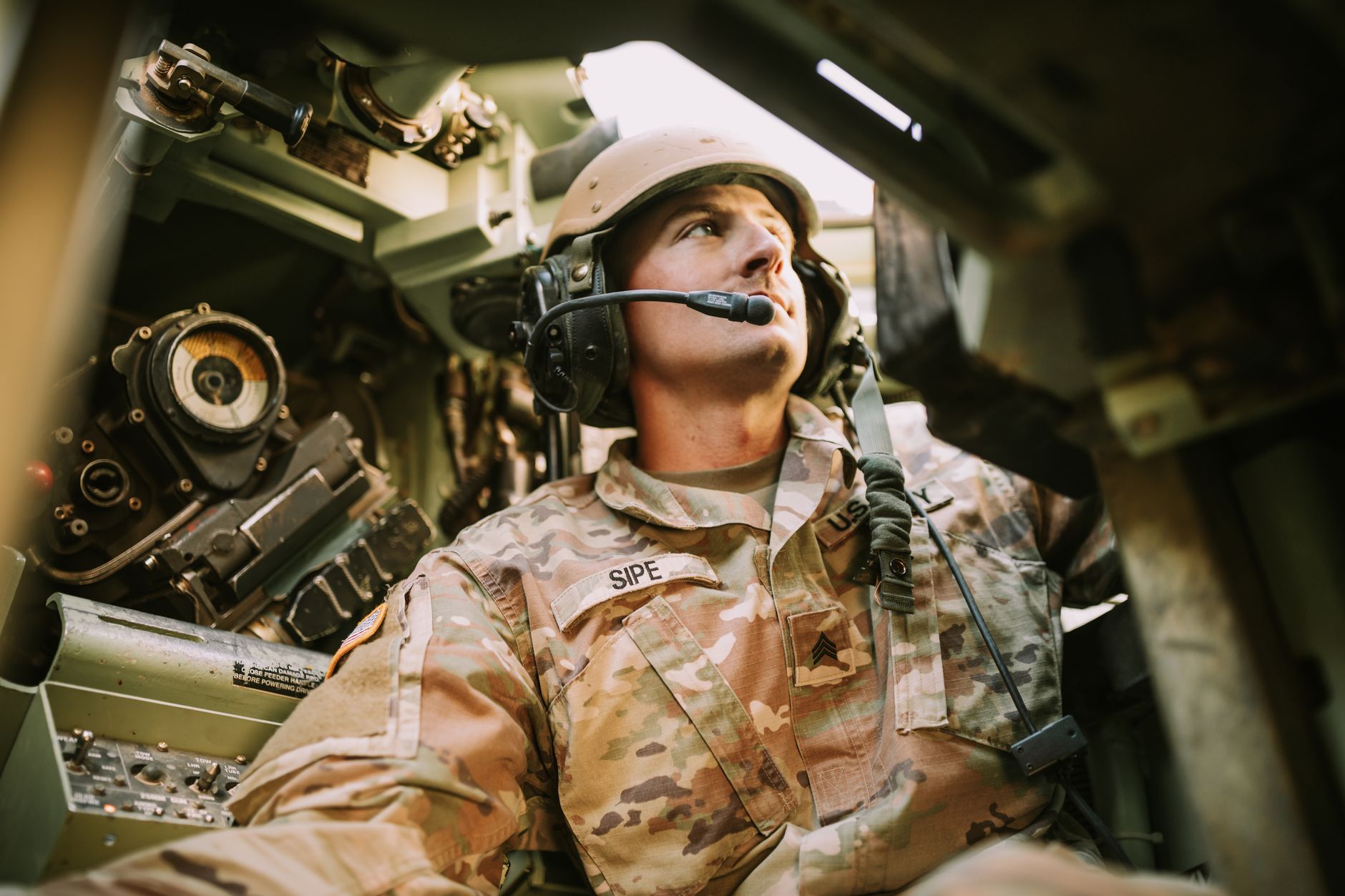
Photo by Art Guzman on Pexels
Nokia and NestAI Forge a New Frontier in Defense-Grade 5G and AI Technology
In a move that underscores the accelerating convergence of commercial telecommunications and modern warfare, Nokia Defense and Finnish artificial intelligence laboratory NestAI have jointly announced an integrated suite of operational technologies designed specifically for contested and GPS-denied battlefield environments. The partnership brings together Nokia’s deep expertise in private 5G network infrastructure with NestAI’s cutting-edge machine learning and situational awareness platforms — a combination that NATO-aligned defense forces have been urgently seeking as the nature of conflict grows increasingly digital and electronic.
The announcement signals not just a product launch, but a broader strategic shift: the world’s leading telecom equipment vendors are no longer content to sit on the sidelines of defense modernization. Instead, they are embedding themselves directly into the operational fabric of next-generation military capability.
What the Nokia-NestAI Integration Actually Delivers
At the core of the joint offering is a tightly integrated stack that marries private 5G connectivity with AI-driven sensing and real-time intelligence processing. According to details surrounding the announcement, the system is engineered to maintain reliable, low-latency communications in environments where GPS signals are jammed, spoofed, or otherwise unavailable — a scenario that has become increasingly common on modern battlefields, particularly in Eastern Europe and other contested zones where electronic warfare is routine.
NestAI contributes its proprietary sensor fusion algorithms, which are capable of aggregating data from disparate sources — including radar, acoustic sensors, drone feeds, and signals intelligence — and synthesizing that information into a coherent operational picture in near real time. Nokia’s defense-hardened private 5G infrastructure provides the high-bandwidth, ultra-low-latency backbone required to transport and process these massive data streams without reliance on commercial or civilian network infrastructure.
5G as a Military Enabler: Why Private Networks Matter
The use of private 5G networks in defense applications is gaining significant traction across NATO member states. Unlike traditional military radio communications, which often rely on specialized and expensive legacy systems, private 5G networks built on commercial standards offer significant advantages in bandwidth, device density, and upgradeability. A single private 5G deployment can theoretically support thousands of connected endpoints — from soldier-worn sensors to autonomous ground vehicles — operating simultaneously within a defined operational area.
Nokia has been one of the most aggressive proponents of adapting its commercial 5G stack for defense use, and its Nokia Defense unit has been building a portfolio specifically tailored to military-grade requirements including TEMPEST standards for electromagnetic emissions, ruggedized hardware for extreme environmental conditions, and support for encrypted, spectrum-agile communications that can resist jamming and interception.
AI-Driven Situational Awareness in Denied Environments
Perhaps the most technically compelling element of the Nokia-NestAI system is its ability to maintain operational situational awareness without depending on external positioning infrastructure. In GPS-denied environments — whether due to active jamming or physical terrain — conventional military systems can degrade rapidly. NestAI’s algorithms address this by leveraging multimodal sensor fusion and on-device AI inference to allow units to maintain geolocation accuracy and threat awareness using only locally available data.
This capability aligns directly with priorities identified in NATO’s Digital Transformation Agenda and mirrors investments being made across the alliance in resilient, decentralized command and control architectures. The ability to push AI inference to the tactical edge — rather than relying on centralized cloud processing — is critical in scenarios where network connectivity itself may be intermittent or compromised.
Defense Tech Meets Telecom: A Growing Market Convergence
The Nokia-NestAI announcement is part of a much larger trend reshaping both the telecom equipment industry and the global defense technology market. Major telecom vendors, including Ericsson, L3Harris, and Leonardo DRS, have all ramped up their defense-oriented product lines in recent years, recognizing that governments — particularly NATO members committed to hitting their 2% GDP defense spending targets — represent a substantial and growing revenue opportunity.
According to market research firm MarketsandMarkets, the global military communications market is projected to surpass $40 billion by 2028, with private tactical networks and AI-enabled C4ISR (Command, Control, Communications, Computers, Intelligence, Surveillance, and Reconnaissance) systems among the fastest-growing segments. For Nokia, which has faced competitive pressure in its commercial 5G business from rivals like Ericsson and Huawei, the defense sector represents a strategically important diversification play.
Finland’s NATO accession in April 2023 has also provided a unique geopolitical tailwind for Finnish defense tech companies like NestAI, which now benefit from direct access to NATO procurement frameworks, joint exercises, and interoperability standards — giving them a pathway to scale their technologies across the alliance.
Industry Outlook: The Telecom-Defense Nexus Deepens
The collaboration between Nokia and NestAI is unlikely to be an isolated development. As electronic warfare, drone swarms, and AI-enabled adversaries become defining features of modern conflict, the demand for resilient, intelligent, and rapidly deployable tactical communications infrastructure will only intensify. Telecom companies that can credibly bridge the gap between commercial 5G capabilities and military-grade operational requirements will find themselves at the center of one of the most strategically significant technology markets of the coming decade.
For the broader telecom industry, the message is clear: 5G is no longer just about faster smartphones and smart cities. Increasingly, it is becoming a cornerstone of national security infrastructure — and the companies that recognize this shift earliest are positioning themselves for outsized influence in the years ahead.
