
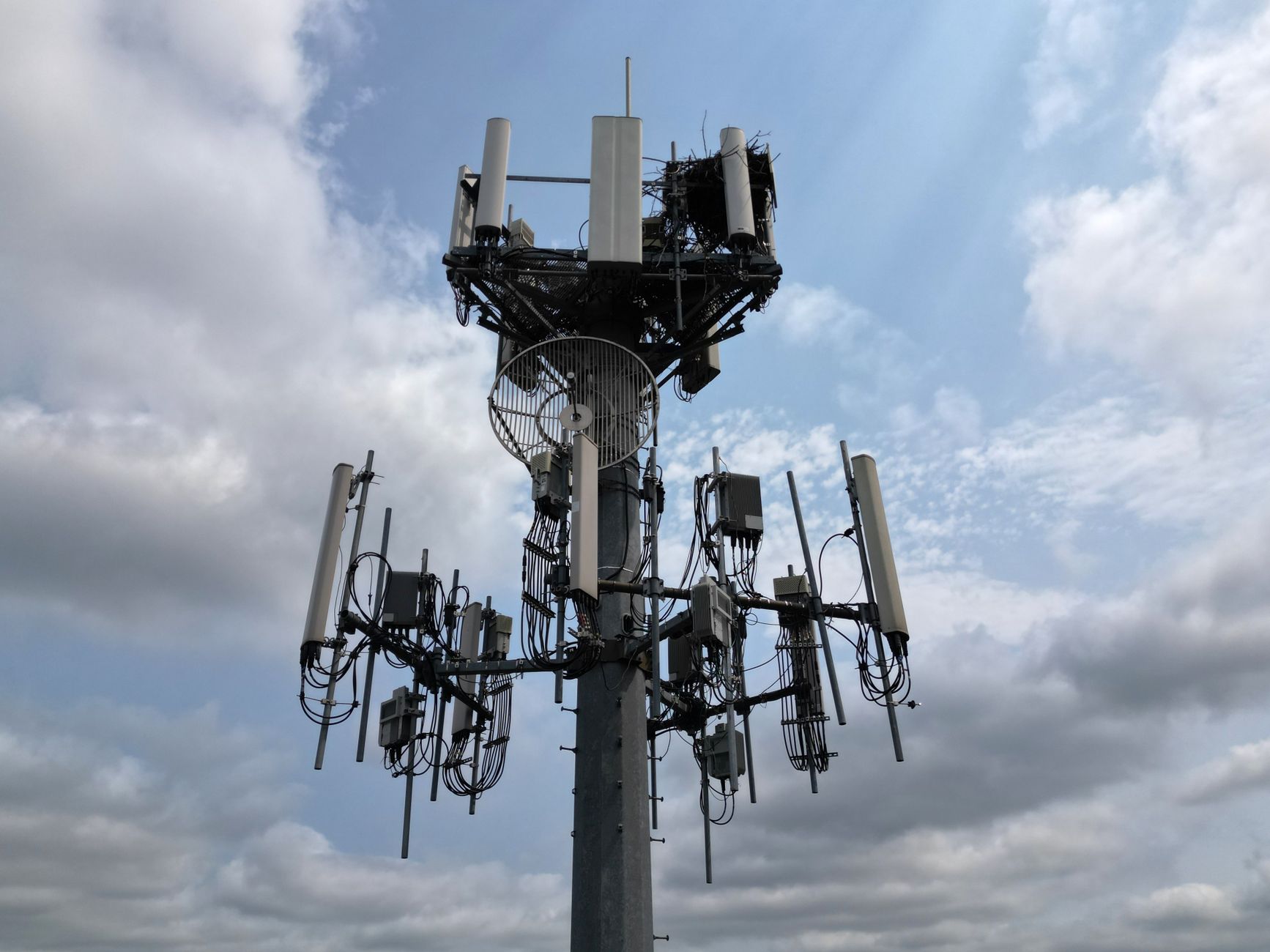
Photo by Giant Asparagus on Pexels
When Nokia quietly offloaded its Enterprise Campus Edge (ECE) business to European private equity firm Aurelius, many in the telecom industry took note — not just for what it means for Nokia, but for what it signals about the future of industrial networking at large. The transaction transfers a roughly 1,000-person operation focused on private wireless networks, campus connectivity, and industrial-grade LTE/5G solutions to new ownership, leaving observers to ask a pointed question: are the big players retreating from Industry 4.0 just as the opportunity is heating up?
Nokia’s Strategic Retreat — Or a Smart Pivot?
Nokia has spent years positioning itself as a heavyweight in the private wireless space, competing fiercely against Ericsson, Cisco, and a growing roster of specialized vendors for lucrative contracts with manufacturers, logistics companies, ports, and utilities. The company’s Digital Automation Cloud (DAC) platform and its MXIE (Mission Critical Industrial Edge) architecture were seen as flagship offerings in this space, promising seamless integration of 5G NR (New Radio) with operational technology (OT) environments.
Yet the ECE divestiture tells a more complex story. Nokia’s core strategy under CEO Pekka Lundmark has increasingly centered on network infrastructure for large mobile operators, cloud-native software, and its growing network-as-a-service ambitions. Industrial edge, while promising, demands deep vertical expertise — in manufacturing automation, robotics, SCADA systems, and OT security — that sits uncomfortably alongside the DNA of a traditional telecom vendor.
By handing the ECE unit to Aurelius, Nokia effectively sheds operational complexity while monetizing an asset that may grow faster under specialized ownership. It’s a calculated simplification, not necessarily a sign of defeat.
What Aurelius Gets: A 1,000-Person Industrial Networking Engine
For Aurelius, the acquisition is a substantial bet on the private wireless market. The firm inherits a fully operational business with deep engineering talent, existing enterprise customer relationships, and a portfolio built around industrial-grade 4G LTE and 5G connectivity. This includes technologies spanning CBRS (Citizens Broadband Radio Service) spectrum in the U.S., DECT-2020 NR for ultra-reliable low-latency use cases, and private network management platforms capable of integrating with major industrial automation stacks.
Private equity ownership often brings sharper commercial focus, leaner operations, and greater agility to pursue niche verticals — qualities that could prove decisive in a market where bespoke solutions win over off-the-shelf platforms. If Aurelius invests wisely, the ECE unit could emerge as a credible independent player in a space currently dominated by vendor-backed programs and telco-driven managed services.
The Bigger Question: Are Large Telcos Losing Their Grip on Industry 4.0?
Nokia’s move doesn’t exist in a vacuum. Across the industry, the narrative around big telcos as the natural owners of Industry 4.0 connectivity is being tested. Deutsche Telekom, Verizon, AT&T, and Vodafone have all launched private 5G managed services with considerable fanfare, but enterprise adoption has been slower and more fragmented than early projections suggested.
Part of the challenge is structural. Enterprises don’t simply want connectivity — they want outcomes. A smart factory operator needs 5G integrated with PLC (programmable logic controller) networks, time-sensitive networking (TSN) protocols, edge compute, and cybersecurity frameworks. Delivering that end-to-end stack requires capabilities that most telcos and even major network vendors have struggled to consolidate under one roof.
The Rise of Specialist Vendors and Systems Integrators
Into this gap have stepped a wave of specialist companies — Celona, Betacom, Druid Software, Athonet — along with hyperscalers like AWS (with its Private 5G offering) and Microsoft (via Azure private MEC). These players are nimble, vertically focused, and increasingly capable of delivering turnkey industrial wireless deployments without the overhead of a legacy telecom organization.
Systems integrators like Siemens, Honeywell, and Accenture are also carving out roles as the trusted intermediaries between connectivity vendors and industrial customers, further diluting the influence of traditional telcos and network OEMs in the value chain.
Spectrum, Standards, and the Path Forward
The technical fundamentals supporting private 5G remain robust. 3GPP Release 17 and the forthcoming Release 18 (the first officially designated “5G-Advanced” standard) introduce critical enhancements for industrial use cases, including improved RedCap (Reduced Capability) devices for IoT, enhanced positioning accuracy, and better support for non-terrestrial networks. URLLC (Ultra-Reliable Low Latency Communications) profiles continue to mature, making 5G increasingly viable for real-time robotics and motion control applications where sub-5ms latency is non-negotiable.
The availability of licensed, lightly licensed, and unlicensed spectrum — from CBRS in the U.S. to the 3.8-4.2 GHz industrial bands across Europe — continues to democratize private network deployment, reducing dependency on any single large vendor or operator.
Industry Outlook: A More Specialized Ecosystem Ahead
Nokia’s ECE exit may ultimately be remembered as the moment the private 5G market grew up — shedding the assumption that telecom giants would dictate its terms. The opportunity in industrial wireless is real and growing, with analyst firm SNS Telecom projecting the global private LTE and 5G network market to surpass $15 billion annually by 2027. But capturing that opportunity increasingly demands vertical depth, integration capability, and enterprise trust that doesn’t automatically come with a Nokia, Ericsson, or Huawei logo.
For Aurelius and the ECE team, the challenge now is to prove that a focused, independent industrial networking specialist can outmaneuver both the legacy giants and the agile newcomers. For the broader industry, Nokia’s move is a signal worth heeding: in Industry 4.0, being big may matter far less than being precisely right.
