
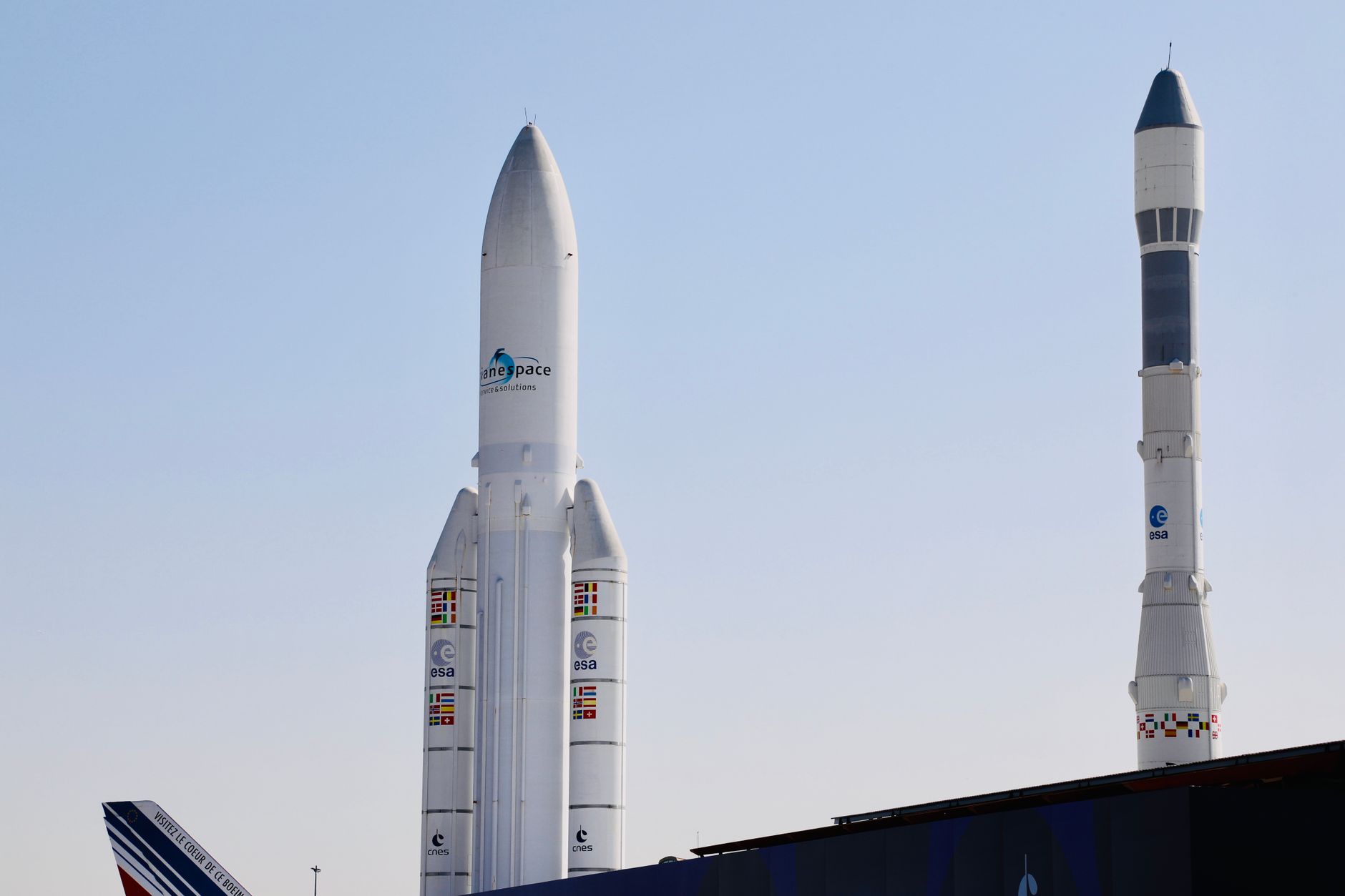
Photo by Léa Claisse on Pexels
ULA’s First Failure in Two Decades Sends Amazon Kuiper Satellites to a Fiery End
In what is being described as one of the most consequential commercial spaceflight failures in recent memory, United Launch Alliance (ULA) suffered its first launch failure in approximately 20 years, sending 40 Amazon Project Kuiper low Earth orbit (LEO) satellites to their destruction before they ever had a chance to reach operational altitude. The incident is a significant and painful setback for Amazon, which has been racing to build a competitive broadband satellite constellation capable of rivaling SpaceX’s already-dominant Starlink network.
The lost satellites represent not just a substantial financial hit — with individual LEO satellites estimated to cost millions of dollars each to manufacture — but also a critical blow to Amazon’s deployment timeline at a moment when every orbital slot and every launched spacecraft counts.
What Happened: A Rare ULA Anomaly
ULA has long been regarded as one of the most reliable launch providers in the industry, boasting a sterling record stretching back decades. The company’s Atlas V and Vulcan Centaur rockets have carried some of the most sensitive national security and commercial payloads ever put into orbit. That makes this anomaly all the more striking — and all the more damaging for Amazon’s carefully constructed launch strategy.
While full technical details of the failure continue to be investigated, early indications point to an upper-stage malfunction that prevented the payload from achieving the correct orbital insertion parameters. For a LEO broadband constellation, precise orbital placement isn’t a luxury — it’s a necessity. Satellites deposited in incorrect or unstable orbits face rapid atmospheric reentry, leaving Amazon with 40 fewer nodes in a network that still has hundreds more to build and launch before it can offer meaningful commercial service.
The Financial and Operational Fallout
Forty satellites may sound like a small fraction of the roughly 3,200 spacecraft Amazon has been authorized by the FCC to eventually deploy, but the timing and concentration of the loss magnify its impact considerably. Amazon had only recently begun transitioning from prototype testing phases to production-scale launches, meaning these satellites were among the first batch intended to form the operational backbone of an early Kuiper service layer.
Industry analysts estimate the direct hardware loss could run into hundreds of millions of dollars when manufacturing, integration, and mission costs are factored together. Beyond the hardware, there is the harder-to-quantify cost of lost time — a resource Amazon is acutely short on. The FCC has imposed a deadline requiring Amazon to have at least half of its authorized constellation — roughly 1,610 satellites — in orbit by mid-2026, or risk losing its licensed spectrum and orbital slot allocations.
Kuiper vs. Starlink: The Gap Widens
Every delay in Amazon’s constellation build-out is a gift to SpaceX’s Starlink, which currently operates well over 6,000 satellites in LEO and serves millions of subscribers globally across residential, enterprise, maritime, and aviation segments. Starlink has the enormous advantage of vertical integration — SpaceX builds its own rockets, manufactures its own satellites, and controls its own launch cadence with a frequency that no competitor can currently match.
Amazon, by contrast, has had to stitch together a launch manifest from multiple providers, including ULA, Arianespace, and even its own Blue Origin’s New Glenn rocket. That diversity was designed as a hedge against exactly this kind of single-provider failure — but it also introduces coordination complexity and means Amazon cannot simply ramp up its own launch rate on short notice the way SpaceX can.
Blue Origin and New Glenn: Can Amazon’s Own Rocket Fill the Gap?
Ironically, this setback may accelerate Amazon’s internal push to rely more heavily on Blue Origin’s New Glenn rocket for future Kuiper launches. New Glenn completed its inaugural flight earlier this year, and while its development road has also seen delays, the rocket’s heavy-lift capability makes it well-suited for batch Kuiper satellite deployments. Greater reliance on a vehicle Amazon controls could help the company regain some scheduling predictability, though New Glenn itself is still early in its operational maturity curve.
Broader Industry Implications for Satellite Broadband
The Kuiper setback is a timely reminder that the satellite broadband race, despite its momentum, remains a genuinely high-risk endeavor. Launches fail. Manufacturing supply chains hit bottlenecks. Regulatory environments shift. For telecom operators and enterprise customers evaluating satellite connectivity as a primary or backup broadband solution, service provider resilience and constellation maturity are increasingly important procurement criteria.
Telecom carriers that have been watching Kuiper as a potential wholesale broadband partner for rural and underserved coverage — a role Starlink has already begun filling through deals with T-Mobile and others — may now face a longer wait before Kuiper can offer the coverage density and service-level guarantees needed for serious commercial agreements.
What Comes Next for Amazon Kuiper
Amazon has not publicly confirmed the full details of its recovery plan, but the company is expected to accelerate its production pipeline and work with launch partners to reschedule replacement missions as quickly as feasible. Insurance coverage for the lost payload will likely soften some of the immediate financial blow, though underwriters in the space insurance market will be closely reassessing ULA’s risk profile in the wake of this anomaly.
For the broader LEO broadband market, the incident underscores a fundamental truth that the most ambitious connectivity infrastructure projects of this generation are being built not in server farms or fiber trenches, but in the unforgiving environment of low Earth orbit — where rocket science, quite literally, is the price of admission.
Amazon’s Kuiper program remains one of the best-funded and most technically credible challenges to Starlink’s dominance. But the road to orbit just got a little longer — and a great deal more expensive.
