
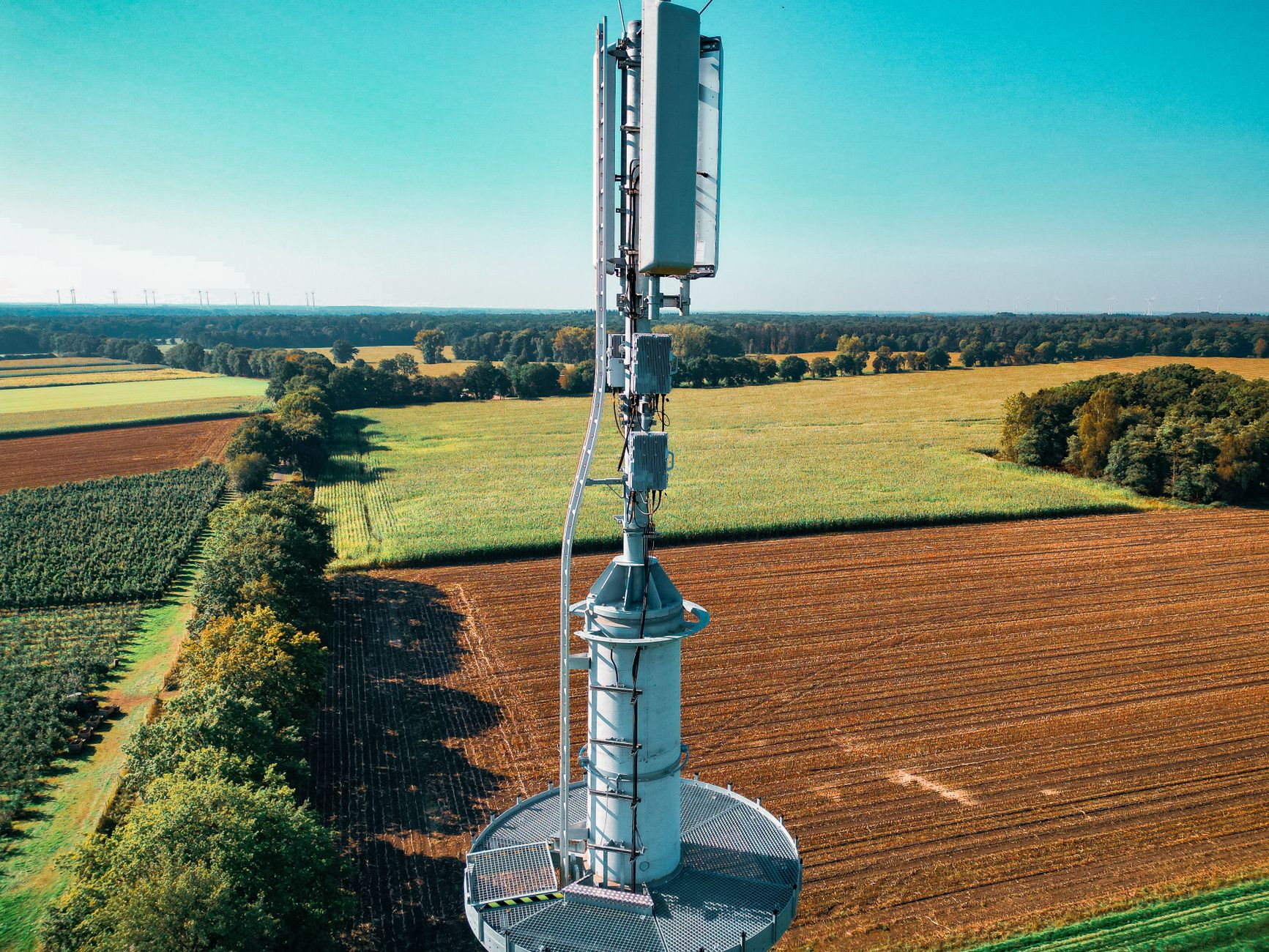
Photo by Sascha Weber on Pexels
Rural Broadband Is No Longer Flying Under the Radar
For decades, Wireless Internet Service Providers (WISPs) operated in relative obscurity — quietly stringing together connectivity across remote farms, mountain communities, and underserved rural towns that major carriers had long written off as unprofitable. But with billions of federal dollars now flowing through the Broadband Equity, Access, and Deployment (BEAD) program, and with satellite heavyweight Starlink aggressively expanding its rural subscriber base, the WISP industry is suddenly operating in a very bright spotlight.
WISPA President and CEO David Zumwalt has become one of the most vocal advocates for the roughly 3,000 independent WISPs operating across the United States, describing them not just as ISPs, but as community institutions. “We think of them as hometown ISPs,” Zumwalt has noted — operators who know their customers by name, serve local schools and businesses, and often provide the only viable broadband option for miles around.
That identity, however, is being tested on multiple fronts simultaneously.
BEAD: Opportunity and Obstacle for Small Operators
The $42.45 billion BEAD program, administered by the National Telecommunications and Information Administration (NTIA), represents the largest single federal investment in broadband infrastructure in U.S. history. On paper, it should be a windfall for WISPs serving unserved and underserved rural areas. In practice, the picture is considerably more complicated.
Many state broadband offices have structured their BEAD implementation plans in ways that heavily favor fiber-to-the-premises (FTTP) deployments, often treating fixed wireless access (FWA) as a second-tier technology despite its ability to deliver 100/20 Mbps service — the BEAD minimum speed threshold — at a fraction of the cost and deployment timeline of fiber.
The concern within the WISP community is that larger fiber operators, often backed by private equity, are using BEAD as leverage to overbuild areas that WISPs already serve adequately. When a subsidized fiber network arrives in a community where a WISP has spent years building customer relationships and infrastructure, the economics can turn toxic almost overnight for the smaller operator.
Zumwalt and WISPA have been pushing NTIA and state broadband offices to ensure that BEAD funds are directed toward genuinely unserved areas rather than enabling redundant overbuilds in communities that already have functional service. The stakes are existential for many smaller operators.
The Starlink Factor: Competitor or Complement?
SpaceX’s Starlink has fundamentally changed the rural broadband calculus. With its low-earth orbit (LEO) constellation now numbering over 6,000 active satellites and consumer pricing that has become increasingly competitive, Starlink is no longer just a stopgap technology — it is a credible long-term option for rural households.
For WISPs, Starlink presents a dual dynamic. On one hand, it is a direct competitor for the same rural subscriber base that WISPs have historically owned. On the other, some WISPs have begun using Starlink as a backhaul solution in areas where fiber or microwave backhaul is cost-prohibitive, effectively turning a competitor into a wholesale infrastructure partner.
The latency gap that once separated LEO satellite from terrestrial fixed wireless has narrowed considerably. Starlink now regularly delivers latency in the 20-40ms range, making it viable for video conferencing, cloud applications, and even light gaming — use cases that once gave WISPs a clear performance advantage over satellite.
Spectrum: The Constraint That Could Define WISP Viability
Perhaps the most technically critical challenge facing the WISP ecosystem is spectrum access. The majority of WISPs operate in unlicensed or lightly licensed bands — 900 MHz, 5.8 GHz, and increasingly the Citizens Broadband Radio Service (CBRS) band at 3.5 GHz. CBRS has been a game-changer for many operators, offering Priority Access Licenses (PALs) and General Authorized Access (GAA) tiers that provide more predictable interference management than traditional unlicensed bands.
However, competition for CBRS spectrum is intensifying. Mobile network operators deploying private 5G networks and enterprise campus solutions are increasingly competing for PAL allocations in the same geographies where WISPs need spectrum capacity. Meanwhile, WISPs argue they need access to licensed mid-band spectrum — particularly in the 6 GHz and 12 GHz bands — to scale their networks to deliver gigabit-class services that can genuinely compete with fiber.
The FCC’s ongoing spectrum proceedings will be pivotal. Decisions around the 6 GHz upper band and the future of the 12 GHz band could either unlock the next generation of WISP capability or leave operators capacity-constrained at precisely the moment demand is accelerating.
Private Equity and Consolidation: The Changing Ownership Landscape
The WISP industry is also undergoing a structural transformation driven by private equity. Roll-up strategies, in which PE-backed platforms acquire multiple regional WISPs to create scaled operators, are reshaping ownership patterns. While consolidation can bring capital and operational efficiency, critics within the industry worry it may erode the community-centric service model that has been the WISP’s greatest differentiator.
Zumwalt has acknowledged this tension, noting that the “hometown ISP” ethos becomes harder to maintain as ownership structures become more complex and geographically distant from the communities being served.
The Road Ahead: Advocacy, Adaptation, and Access
Despite these headwinds, the fundamentals supporting the WISP sector remain strong. Fixed wireless technology continues to evolve rapidly — with Wi-Fi 7 backhaul, 5G NR-based fixed wireless platforms, and advanced beamforming enabling higher throughput and greater spectral efficiency than even five years ago. WISPs that embrace these technologies while maintaining their community relationships are well-positioned to remain indispensable to rural America.
The policy environment will ultimately be as important as the technology. WISPA’s advocacy for equitable BEAD implementation, meaningful spectrum access, and protection from predatory overbuilds reflects an industry that understands its survival depends as much on Washington as on antenna placement and radio engineering. As Zumwalt frames it, the goal is simple: ensure that the operators who showed up for rural America when no one else would are still standing when the BEAD dust settles.
