
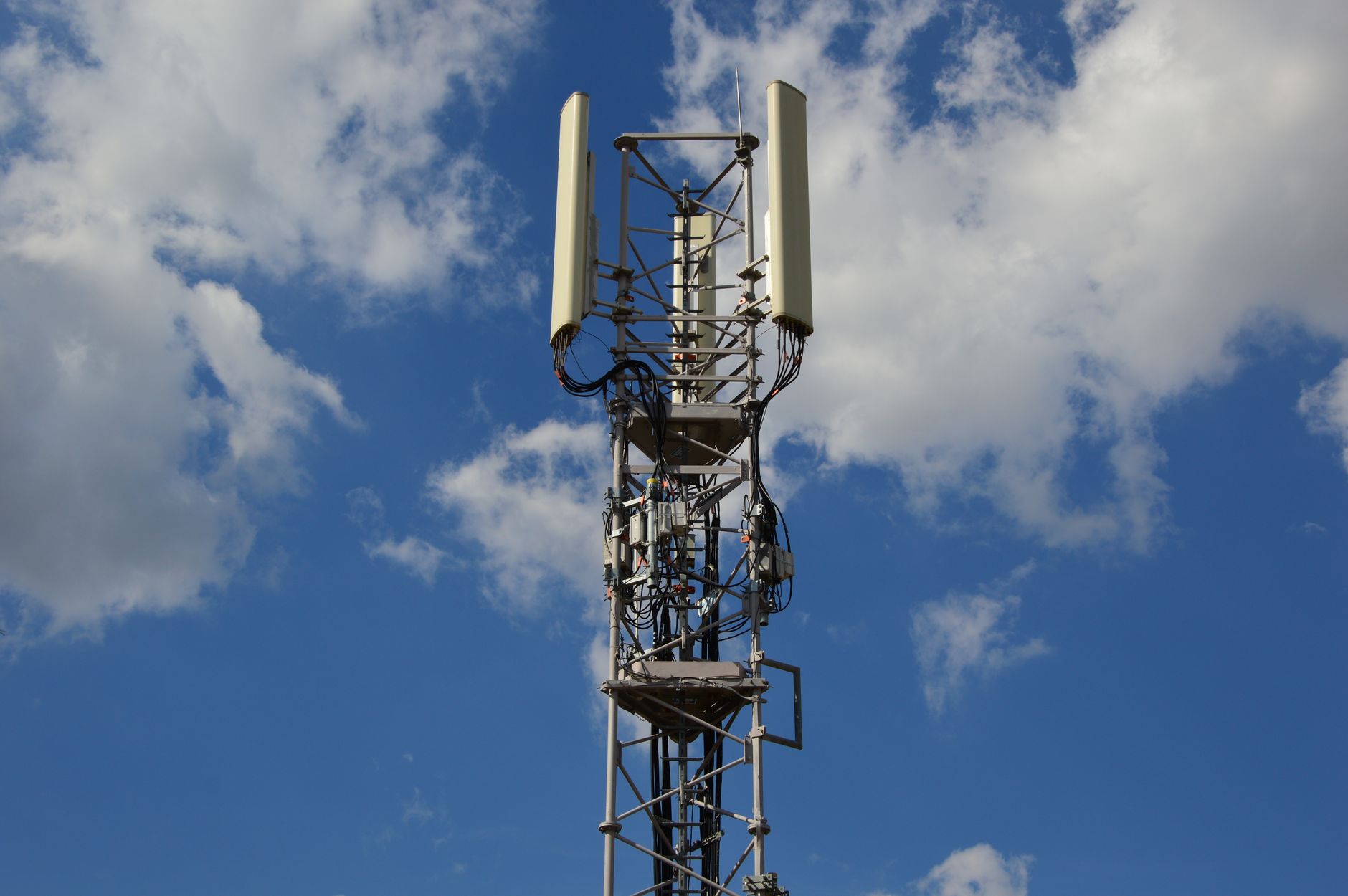
Photo by Ulrick Trappschuh on Pexels
As artificial intelligence applications proliferate across smartphones, edge devices, and enterprise platforms, one of the telecom industry’s most pressing questions has been whether the resulting surge in mobile uplink traffic will force operators into a new wave of costly radio access network (RAN) investment. Deutsche Telekom, one of Europe’s most influential carriers, is offering a clear and perhaps surprising answer: not necessarily.
The German telecommunications giant has signaled that it does not anticipate AI-related mobile uplink demand to trigger incremental capital expenditure on its RAN infrastructure — at least not in the near term. It’s a position that carries significant weight across the global operator community and challenges some of the more alarmist narratives about AI’s infrastructure burden.
The Uplink Challenge: Real, But Manageable
To understand Deutsche Telekom’s stance, it helps to appreciate why uplink has emerged as such a focal point. Traditionally, mobile networks were engineered around asymmetric traffic patterns — users downloading far more data than they upload. Streaming video, web browsing, and app downloads are inherently downlink-heavy workloads.
AI is changing that calculus. Generative AI applications, real-time voice and video processing, cloud-based inference tasks, and AI-assisted productivity tools increasingly require devices to push substantial amounts of data — images, audio, video snippets, sensor data — back to network servers or cloud platforms for processing. This creates uplink pressure that 4G and even early 5G deployments weren’t specifically optimized for.
Industry analysts have flagged uplink capacity as a potential bottleneck, particularly in dense urban environments where spectrum resources are contested. Some vendors have used this argument to advocate for additional spectrum allocations, new antenna deployments, or costly Massive MIMO upgrades focused on uplink performance.
Deutsche Telekom’s Counterargument: Software Over Steel
Deutsche Telekom’s position rests on a nuanced but technically credible argument: existing RAN infrastructure, when properly optimized through software, scheduling improvements, and spectral efficiency enhancements, can accommodate the anticipated growth in AI-driven uplink traffic without requiring a new round of hardware capex.
Modern 5G NR (New Radio) base stations, particularly those supporting Massive MIMO with beamforming capabilities, already possess considerable headroom in uplink performance that operators have not fully exploited. Dynamic TDD (Time Division Duplex) configurations, for instance, allow operators to shift the ratio of uplink-to-downlink time slots based on real-time traffic demands — a software-level adjustment that costs nothing in additional hardware.
Furthermore, advances in uplink carrier aggregation, enhanced MIMO techniques, and AI-driven network optimization tools — ironically powered by the same AI that’s generating the traffic — are enabling operators to extract significantly more capacity from existing spectrum assets. Vendors including Ericsson, Nokia, and Huawei have all demonstrated uplink throughput improvements exceeding 30–50% through software-only upgrades on deployed hardware.
The Role of Edge Computing in Traffic Management
Another key variable in Deutsche Telekom’s calculus is the growing role of mobile edge computing (MEC). By processing AI workloads closer to the device — at the network edge rather than distant cloud data centers — operators can dramatically reduce the volume of raw data that needs to traverse the RAN uplink. Compressed, pre-processed data payloads place far less strain on radio resources than unprocessed sensor streams or raw image files.
Deutsche Telekom has been actively building out its edge computing footprint, and this infrastructure investment, while real, is categorically different from RAN capex. The operator appears confident that a combination of edge processing and RAN software optimization will keep AI-driven uplink growth within existing network capacity envelopes.
What This Means for the Broader Industry
Deutsche Telekom’s position is more than a corporate financial forecast — it’s a strategic signal to investors, regulators, and industry peers. For shareholders, it reinforces a narrative of capex discipline at a time when operators globally are under pressure to justify 5G returns. For regulators, it suggests that spectrum policy — rather than new RAN mandates — may be the more productive lever for addressing AI-era capacity demands.
The stance also puts mild pressure on RAN vendors who have a vested interest in framing AI traffic growth as a hardware problem requiring hardware solutions. If major European operators like Deutsche Telekom demonstrate that software optimization and intelligent traffic management can absorb AI uplink demand, it complicates vendor arguments for accelerated hardware refresh cycles.
Not everyone in the industry shares Deutsche Telekom’s optimism. Some operators serving markets with less mature 5G infrastructure, or those facing acute spectrum scarcity in key frequency bands, may find the headroom argument less convincing. In markets where mid-band 5G spectrum — the sweet spot for balancing coverage and capacity — remains limited, uplink capacity constraints could manifest sooner and more severely.
Looking Ahead: The 6G Wildcard
Over a longer horizon, the calculus may shift. As AI applications become more sophisticated — think always-on ambient computing, holographic communications, or pervasive AR/VR — the volume and latency requirements of uplink traffic could eventually outpace what current 5G infrastructure can efficiently handle through software alone. That’s precisely the use-case environment that 6G research programs are addressing, with uplink-downlink symmetry and sub-millisecond latency among the core design objectives.
For now, Deutsche Telekom’s message is disciplined and pragmatic: AI traffic growth is real, uplink demand is rising, but the industry’s engineering toolkit — from dynamic TDD to edge computing to AI-optimized scheduling — is more than capable of meeting the moment without cracking open the capital expenditure envelope. In an era of investor scrutiny and compressed telecom margins, that’s an argument the market is eager to believe.
