
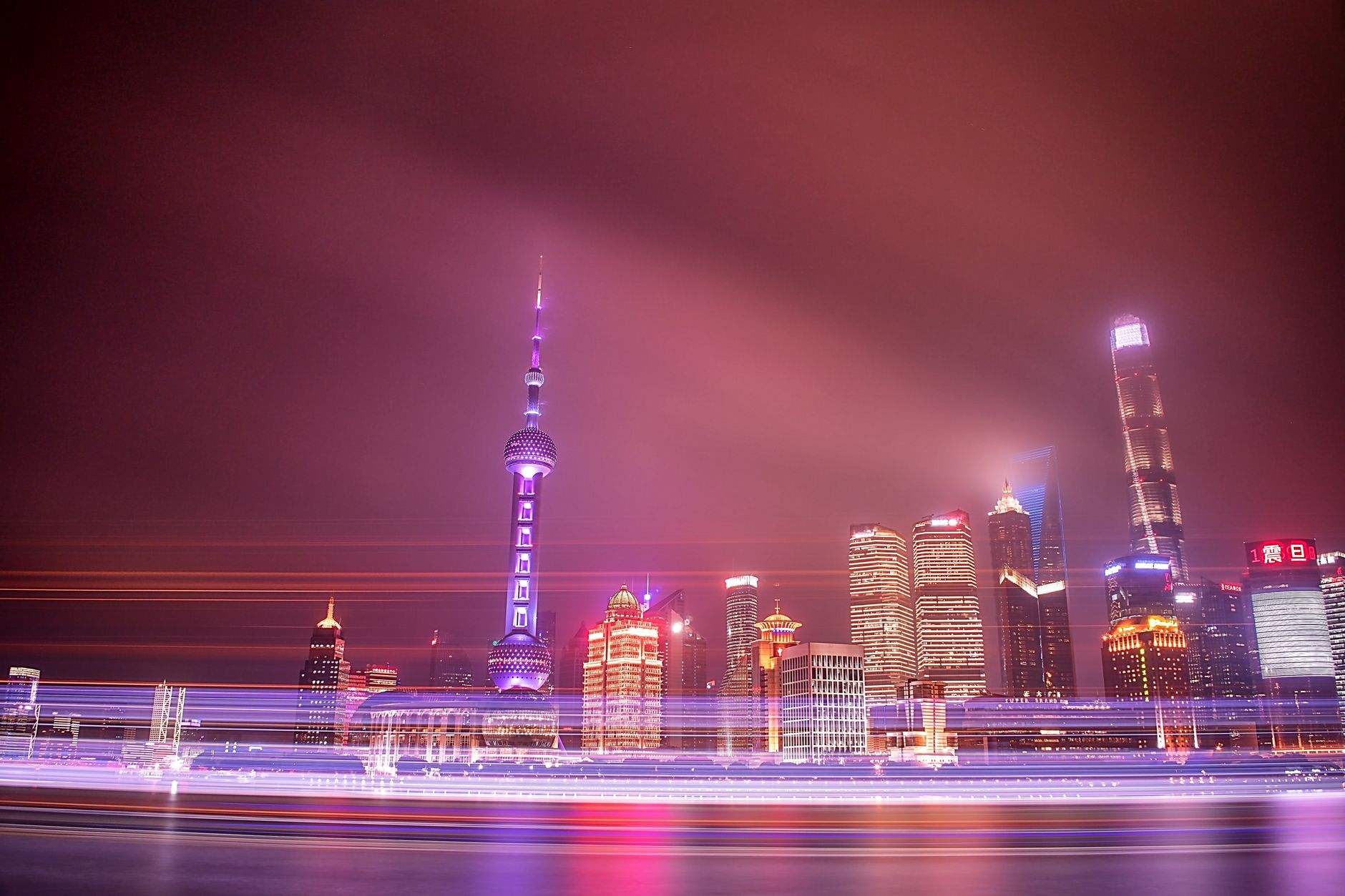
Photo by zhang kaiyv on Pexels
5G-A Comes to Life at One of China’s Most Visited Cultural Destinations
When millions of tourists descend on Datang Everbright City in Xi’an — one of China’s most celebrated Tang Dynasty-themed commercial and cultural districts — they expect an immersive, seamless experience. Now, thanks to a joint deployment by Huawei and China Telecom, the network infrastructure beneath their feet is as advanced as the spectacle in front of their eyes. The two companies have rolled out a 5G-Advanced (5G-A) network at the venue, marking one of the most high-profile real-world applications of next-generation wireless technology in the tourism and entertainment sector.
At the heart of the deployment is three-component carrier aggregation (3CC), a sophisticated technique that bonds multiple spectrum bands together to dramatically increase throughput, reduce latency, and improve network reliability — even in the kind of densely packed crowd scenarios that routinely overwhelm conventional 4G and early 5G infrastructure.
What Is 5G-A and Why Does 3CC Matter?
5G-Advanced, sometimes referred to as 5.5G, represents the next evolutionary step in the 3GPP standards roadmap — specifically Release 18 and beyond — before the full transition to 6G. While standard 5G already offers substantial improvements over LTE, 5G-A introduces a suite of enhancements including uplink and downlink carrier aggregation, higher-order MIMO configurations, integrated sensing and communication (ISAC), and deeper native AI integration at the network layer.
Three-component carrier aggregation (3CC) is particularly significant in dense venue environments. By simultaneously aggregating three separate carrier frequencies — which can span sub-6 GHz mid-band and even millimeter wave (mmWave) spectrum — the network can deliver peak downlink speeds exceeding 10 Gbps under ideal conditions, while dramatically increasing the number of concurrent users that can be served without degradation in quality of service (QoS).
In practical terms for a tourist hotspot like Datang Everbright City, this means visitors can simultaneously stream 4K video content, use AR-enhanced navigation apps, share high-resolution content to social media, and engage with AI-powered digital guides — all without buffering or dropped connections, even during peak evening hours when foot traffic is at its highest.
AI as the Intelligence Layer
The Datang deployment doesn’t just stop at faster pipes. AI is woven into the network architecture to dynamically manage resources in real time. Huawei’s network AI engine continuously analyzes traffic patterns, predicts congestion hotspots based on crowd movement data, and automatically reallocates spectrum and antenna resources accordingly. This kind of predictive, self-optimizing network behavior — often referred to as Autonomous Networks (AN) — reduces the need for manual intervention and ensures consistent service quality throughout the day.
On the application side, AI is enabling a new class of tourism experiences. Visitors can interact with AI-powered digital avatars modeled after Tang Dynasty figures, access real-time translation services, and receive personalized venue recommendations driven by behavioral analytics. These applications are only viable at scale because the underlying 5G-A network can handle the enormous data demands they generate with minimal latency.
Uplink Enhancements: The Underrated Game-Changer
One often-overlooked aspect of the 5G-A deployment is its focus on uplink performance. Traditional 5G networks have been primarily optimized for downlink — delivering content to users. But modern tourist behaviors, which include live-streaming, cloud gaming, and uploading high-resolution images and videos in real time, demand equally robust uplink capacity. Huawei’s 5G-A architecture incorporates uplink carrier aggregation and advanced beamforming to ensure symmetrical performance, a critical differentiator in social-media-saturated public venues.
Broader Industry Implications
The Xi’an deployment is more than a single showcase project — it’s a proof-of-concept for a global trend. As network operators worldwide search for compelling use cases to justify 5G monetization and justify further investment in 5G-A infrastructure, vertical industries like tourism, live entertainment, sports venues, and smart cities are emerging as priority targets.
China has been particularly aggressive in this space. China Telecom, China Mobile, and China Unicom have all ramped up 5G-A commercial rollouts in 2024 and into 2025, with hundreds of cities now covered by 5G-A base stations. Huawei, which supplies the lion’s share of network equipment for these deployments despite ongoing geopolitical headwinds in Western markets, has positioned 5G-A as a key pillar of its global commercial strategy.
For Western operators and vendors watching from the sidelines, the Datang deployment offers both inspiration and a competitive benchmark. Companies like Ericsson and Nokia are actively pursuing similar carrier aggregation and AI-native network strategies under their own 5G-A roadmaps, with major venue deployments at stadiums, airports, and theme parks in Europe and North America beginning to gain traction.
The Road Ahead: From Smart Tourism to Smart Cities
The technology being demonstrated at Datang Everbright City is not confined to tourism. The same 5G-A and AI stack underpins emerging applications in smart manufacturing, autonomous vehicle coordination, remote healthcare, and public safety — all domains where ultra-reliable, low-latency, high-throughput connectivity is non-negotiable.
As Huawei and China Telecom refine their deployment learnings from Xi’an and scale the model to other high-footfall venues across China, the telecom industry will be watching closely. The ability to deliver quantifiable, monetizable value in consumer-facing environments may well be the clearest signal yet that 5G-A is not just a standards milestone — it’s a genuine commercial reality.
For network operators globally, the message from Datang is clear: the era of intelligent, multi-band, AI-assisted wireless networks has arrived, and the venues that embrace it first will define the digital experience standard for years to come.
