
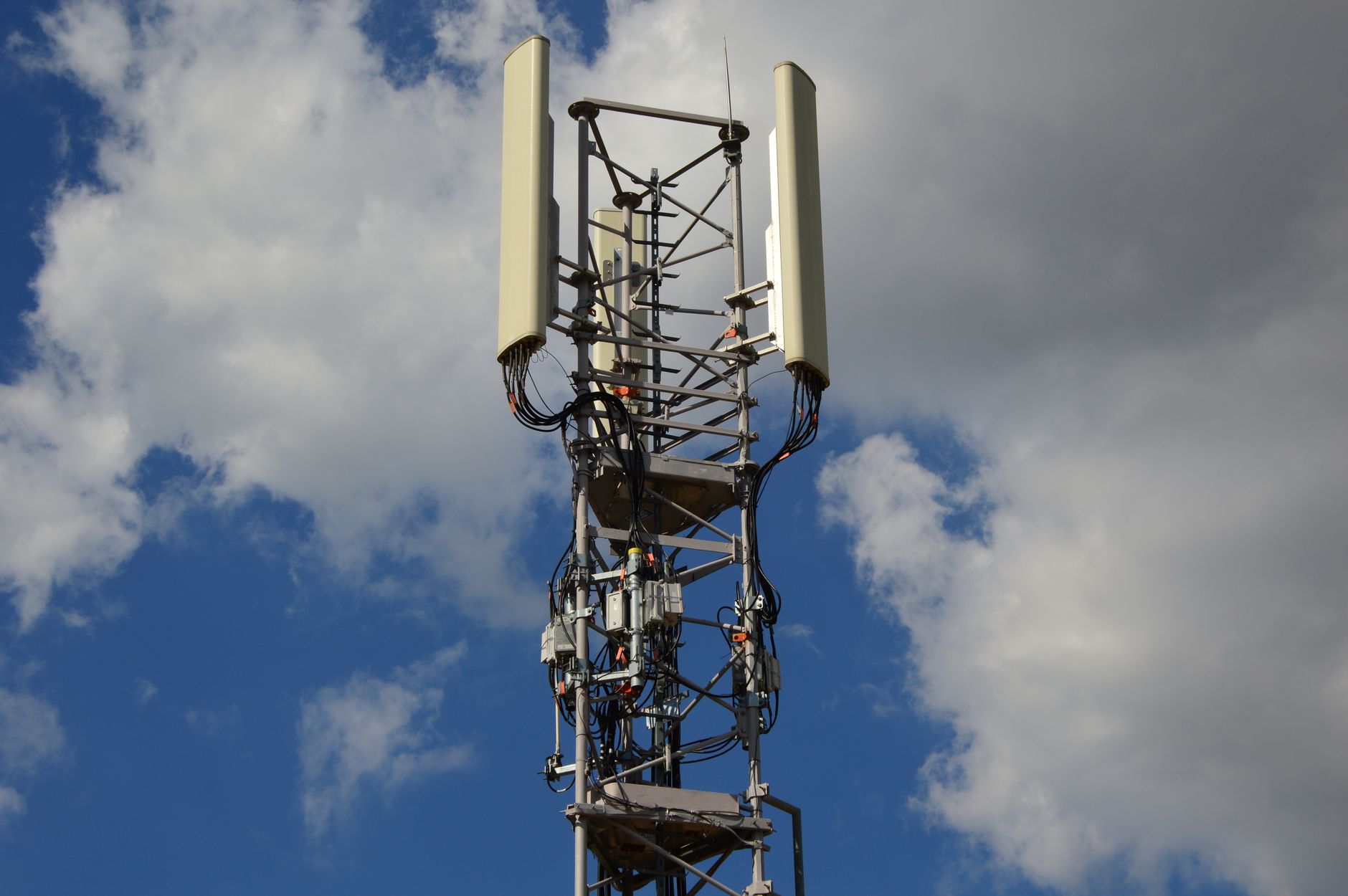
Photo by Ulrick Trappschuh on Pexels
Private 5G Is Growing Up — and the Market Is Reshuffling Accordingly
For years, private 5G was the telecom industry’s favorite “next big thing” — perpetually promising, perpetually just around the corner. That corner has officially been turned. The private 5G market is now in a genuine maturity phase, moving beyond pilots and proof-of-concepts into full-scale enterprise deployments. And as money flows more seriously into the space, the vendor pecking order is being rewritten in real time.
The clearest signal of this transition? Nokia — long considered one of the default go-to vendors for private wireless — has slipped to fourth place in global private 5G market rankings. It’s a striking development from a company that invested heavily in positioning itself as an enterprise-first wireless provider and built an entire portfolio around its Digital Automation Cloud (DAC) platform. The fall isn’t necessarily a collapse, but in a market this competitive and this nascent, rankings matter for enterprise buyer confidence.
Who’s Filling the Vacuum?
Nokia’s demotion didn’t happen in a vacuum — it happened because others are executing more effectively right now. Ericsson has been methodically building out its enterprise wireless credentials, leveraging deep carrier relationships to bundle private network offerings with managed services. Huawei, despite Western market restrictions, continues to dominate in Asia-Pacific deployments, giving it substantial volume in global tallies. And perhaps most interestingly, a crop of more agile, software-centric vendors and systems integrators are capturing deals that the traditional RAN giants are either too slow or too expensive to close.
Companies like Celona, Druid Software, and Athonet have carved meaningful niches by offering cloud-native, CBRS-enabled, and carrier-agnostic private LTE/5G solutions that enterprises can deploy and manage with far less complexity than traditional telecom infrastructure. Their rise reflects a broader truth emerging in private wireless: enterprises don’t necessarily want a mini-carrier network — they want connectivity that behaves like enterprise IT.
The CBRS Factor in North America
In the United States, the Citizens Broadband Radio Service (CBRS) band at 3.5 GHz continues to serve as a critical on-ramp for private 5G adoption. The availability of lightly licensed spectrum without the need for costly mmWave deployments has allowed manufacturing plants, warehouses, hospitals, and campuses to deploy standalone private networks at commercially viable price points. According to industry estimates, CBRS-based deployments account for a significant proportion of North American private network installations, and that share is growing.
The technical maturity of standalone (SA) 5G architecture is also playing a role here. Unlike non-standalone (NSA) deployments that depend on an LTE anchor, SA 5G enables native network slicing, ultra-low latency, and full 5G core functionality — features that matter enormously for industrial IoT applications, autonomous mobile robots (AMRs), and time-sensitive manufacturing operations. As SA-capable chipsets and devices become more accessible, the performance gap between private 5G and traditional Wi-Fi is becoming harder for enterprise IT teams to ignore.
Vertical Markets Driving Demand
The enterprise segments driving private 5G adoption are becoming clearer. Manufacturing leads the charge, where deterministic latency and high device density are non-negotiable. A factory floor running dozens of AMRs, computer vision systems, and real-time quality control applications simply cannot tolerate the interference variability of unlicensed Wi-Fi spectrum.
Ports and logistics hubs represent another high-growth vertical, where coverage over large outdoor areas with moving machinery creates challenges that cellular technology handles far more gracefully than Wi-Fi. Healthcare campuses, mining operations, and energy utilities are also increasingly active in private 5G conversations, attracted by the security, reliability, and SLA guarantees that dedicated spectrum and infrastructure provide.
Managed Services: The Game-Changer for Operator Revenue
One of the most consequential shifts in the private 5G landscape is the rise of managed private network services offered by mobile network operators. Rather than selling enterprises raw spectrum and hardware, carriers like Deutsche Telekom, Verizon, AT&T, and Vodafone Business are packaging private 5G as a managed service — handling deployment, operations, and SLA management on behalf of enterprise customers.
This model changes the economics significantly. Enterprises get predictable opex-based pricing without the burden of building internal RF engineering teams. Operators get recurring revenue streams and deeper enterprise stickiness. And vendors get pulled into deals through operator channels rather than having to sell directly to enterprise procurement teams — a dynamic that benefits those with strong carrier relationships and may partly explain Nokia’s current headwinds.
Industry Outlook: Consolidation Ahead
The private 5G vendor landscape, despite its dynamism, is likely heading toward consolidation. As enterprise buyers mature and demand proven scale, simpler integration, and end-to-end accountability, the advantage will increasingly shift toward vendors who can offer complete solutions — RAN, core, management, and services — rather than best-of-breed point products.
Nokia still has the portfolio depth to stage a comeback; its challenges appear more execution-related than fundamental. But the broader message from the current rankings is unmistakable: in a market finally hitting its stride, there is no guaranteed incumbency. Private 5G is no longer a promise — it’s a product. And the companies that treat it as such are winning.
